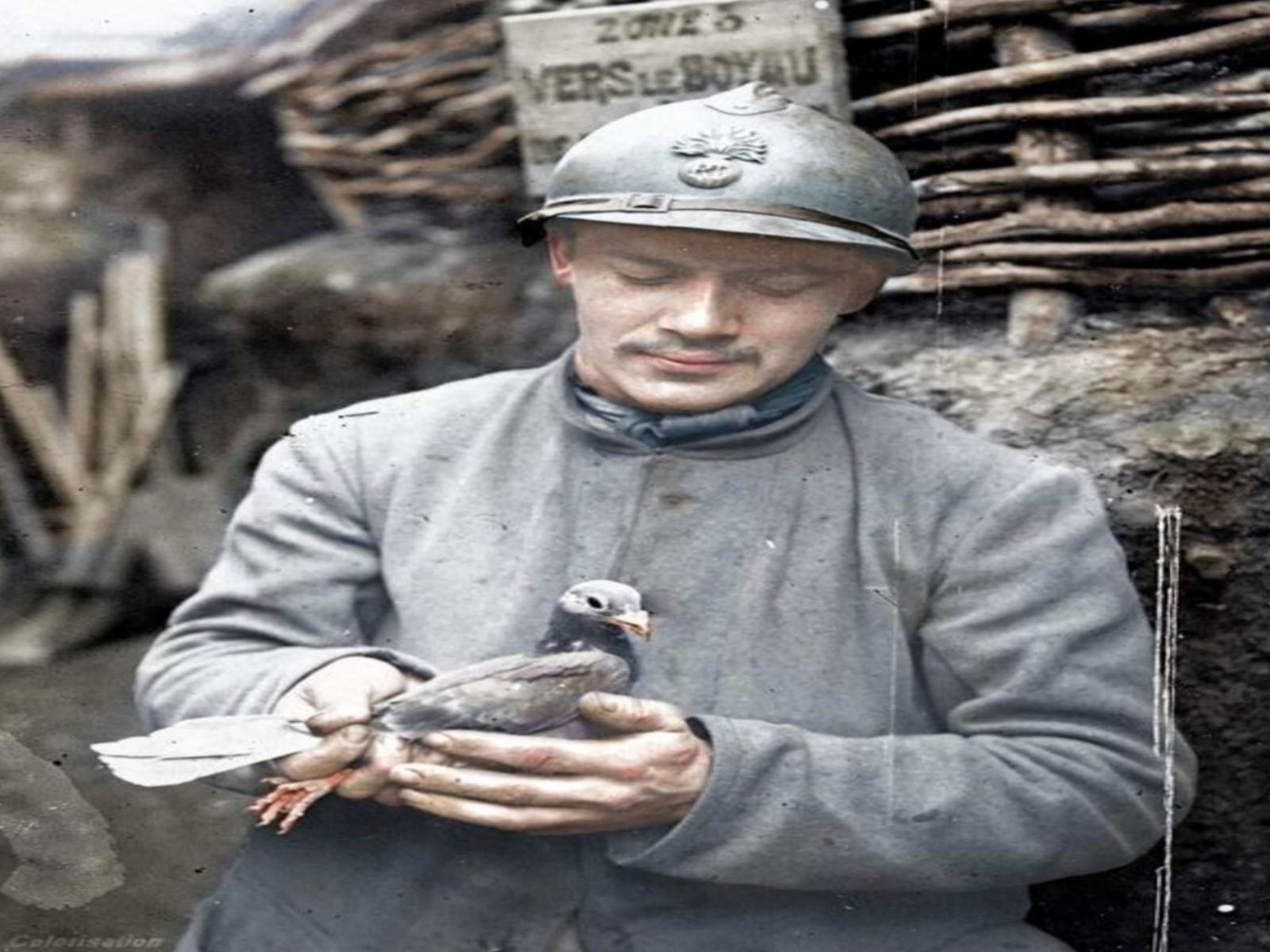
The exhibition addresses the topic of military and civilian communication made through posters, flyers, postcards, signaling instruments such as launchers and flags, but also horns and whistles that were used by officers to signal the charge when leaving the trenches. It also recounts the importance of pigeons used in communication, which were invaluable during the history of World War I for long-distance connections.
Exhibited are many pieces of great significance, some of which are unique: propaganda flyers that were dropped from airplanes, such as those urging the Austrians to surrender, of which a whole bundle was found right in our territory; one of the first British battery-powered trench torches; an interesting British map holder from 1918; a famous PioPion telegraph from 1916; an original pigeon house; a Pathe cinema projector; a rare signaling flag of the Royal Navy used also in artillery and found in England, as well as galena radios, and much more. Inside the exhibition, a barrack has also been reconstructed with an Italian telephone station with a soldier from the 15th Brigade Sassari.
Many pieces were purchased by the Museum, others are the result of donations, even permanent ones, and each could tell its own particular story, and thus a piece of the history of the conflict. The exhibition, signed by the Museum of the Great War and the Museum Siben Alte Komoine, was curated by the Museum Committee under the scientific direction of Dr. Glauco Angeletti, an expert oplologist from the Ministry of Culture.
Text taken from: Giornale L'Altopiano - The voice of the 7 Municipalities