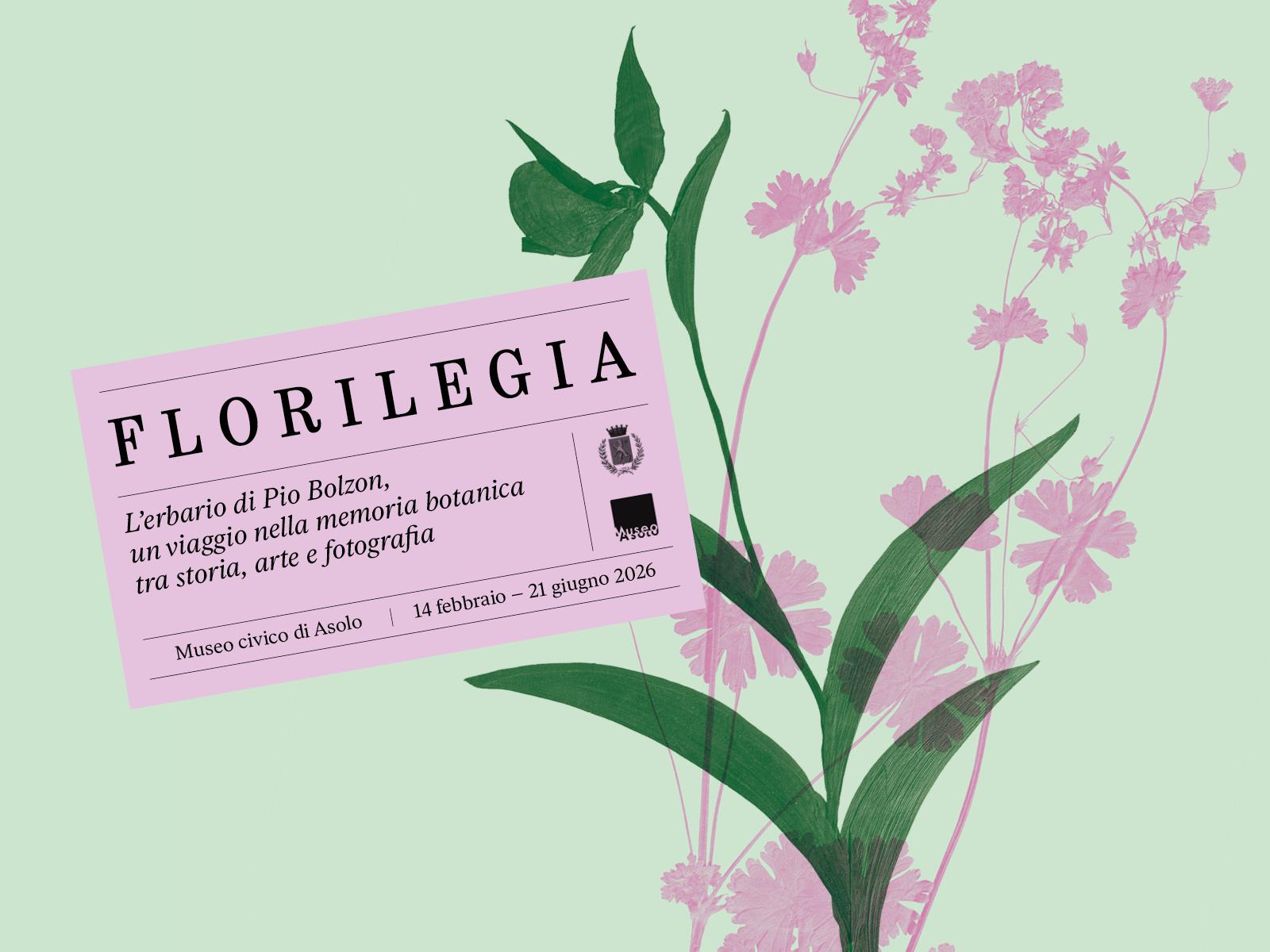
Florilegia is a fascinating journey, where botany becomes a key to understanding our relationship with nature and the territory.
Starting from precious Renaissance volumes and historical herbariums, the heart of the exhibition consists of the unprecedented dried collection of Pio Bolzon from Asolo (1867–1940), an extraordinary testimony to the biodiversity of our territory.
Housed in the Archive of Asolo, the Bolzon herbarium is here presented to the public for the first time.
Alongside, we find the sensitive perspective of the Lopoukhine sisters, Russian exiles adopted by Asolo, who in their delicate botanical watercolors capture on paper the rhythm of the seasons and blooming.
The route is enriched by the contemporary gaze of photographs by Fabio Zonta, where flowers, isolated from their everyday context, become luminous, almost suspended presences.
Finally, the exhibition is complemented by a rich calendar of events inviting to rediscover the silent language of nature.
Pio Bolzon (1867–1940) was a botanist from Asolo, known especially for his contribution to systematic botany as evidenced by numerous publications and floristic reports related to different areas of northern Italy and the Elba and Savona territories. His work fits into the context of the late 19th and early 20th centuries, a period when the Linnaean system continued to be widely used, but when there was also an emerging greater attention to phytogeography and evolutionary relationships among plants.