In the early years of the 1800s, the tragedy of the “Carbonari della Fratta” was unfolding, which is the reason why our city is included in all national histories as the first example of Austrian repression of the aspirations for freedom and national emancipation (1818).
The premise for activating the intentions of national unity and redemption was facilitated by the presence in the area of country residences of noble citizens, in contact with notables and representatives of the local and nearby bourgeoisie, along with strong cultural traditions that were heightened during the Napoleonic period.
In remembrance of the sacrifice of the Carbonari, a monument was erected in 1867, the first in Veneto liberated from the Austrians after the third war of independence, created by the Veronese sculptor Grazioso Spazzi.
The Municipality of Fratta Polesine has been promoting a project to enhance its historical - artistic - cultural heritage and a program to encourage tourism in its territory for years.
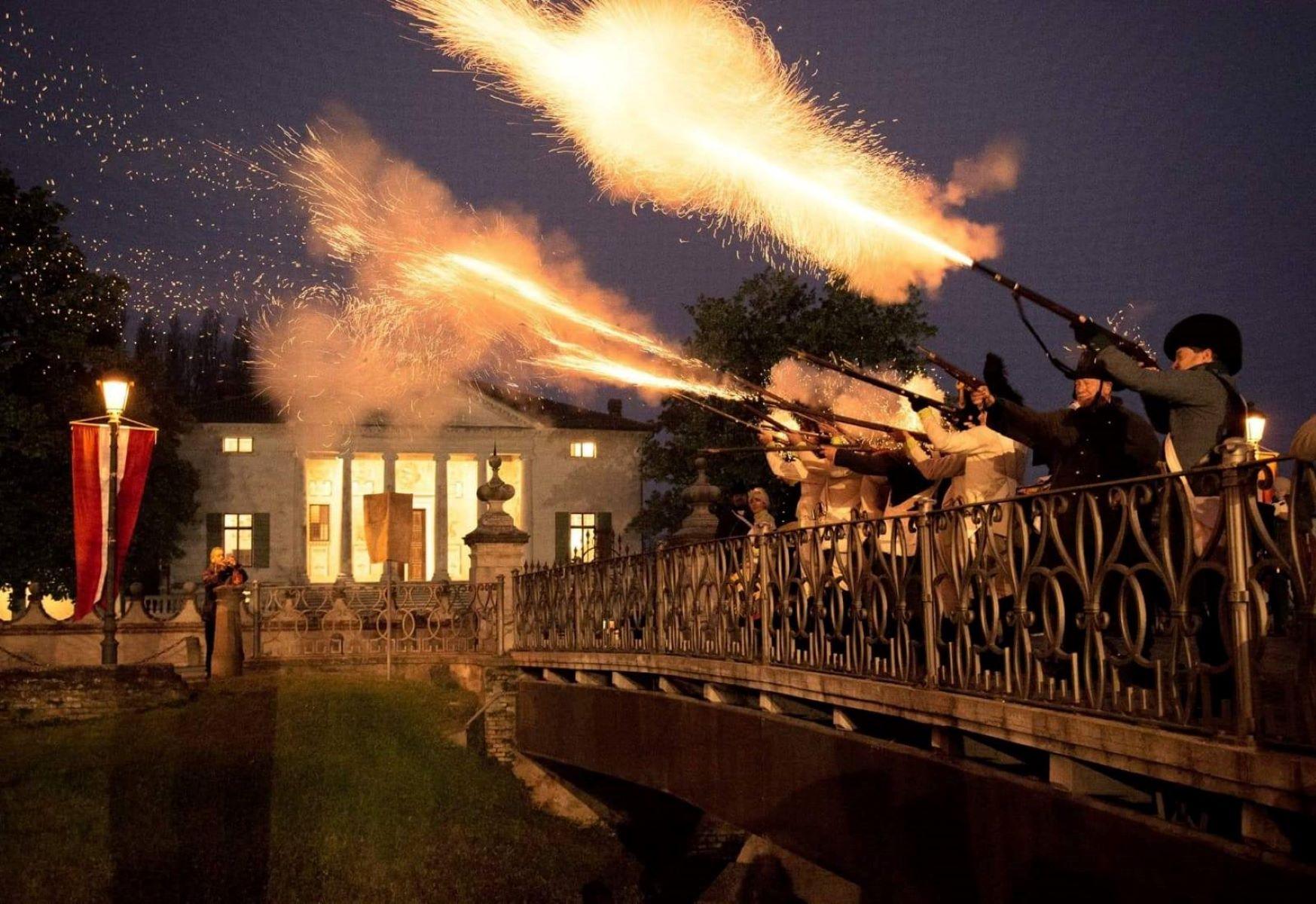
As part of this project, since 2002, a cultural event called “Le Giornate della Carboneria” has been organized: the reevaluation and enhancement of a significant patriotic historical moment at the dawn of the Risorgimento, featuring the “Carbonari della Fratta” in 1818. On this occasion, the importance of their actions in national history is emphasized, marking the first example of Austrian repression of the aspirations for freedom and independence of the Italians.
It should be remembered that Fratta Polesine was the place where the sectarian phenomenon of the Carboneria experienced its most tragic moment and involved local figures such as Count Antonio Fortunato Oroboni, Antonio Villa, Marco Fortini, and people from Polesine like Felice Foresti, Giovanni Bacchiega, and Costantino Munari, who were imprisoned, and some died in the fortress of Spielberg and Ljubljana, as Silvio Pellico recalls in “Le mie prigioni.”
The program of “Le Giornate della Carboneria” is an event that takes place every year on the second weekend of November.
Among the various events, the Carbonaro Banquet stands out, a dinner with a period menu and dramatization with actors in costume, along with the historical reenactment that takes place on Sunday in the town square with actors and dozens of participants.