The works of Giovanni Pinosio arise from the intermediate space. Broken bodies, interrupted anatomies, listening limbs that do not impose themselves, but insinuate. They celebrate but do not describe, they open but do not close.
Levitas, a Latin word that, in addition to physical lightness, originally also meant instability and changeability. It is used and interpreted by the author as a subtle vibration, and a suspended moment of breath.
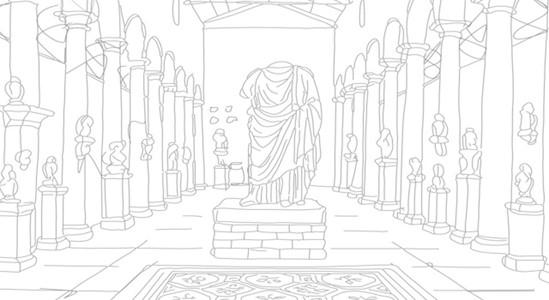
The museum itself becomes a porous body, a breathing space where the past dialogues with the present. The ancient presences of marble and stone become silent interlocutors: they welcome without opposing, accompany without overshadowing. From the stone artifacts departs the thread that reconstructs missing parts before dissolving and intertwining with Pinosio’s suspended bodies.
Each element breathes in relation to the other, in a visual ecosystem where emptiness is generative, the unfinished is value, and lightness is a form of listening. It is not about exhibiting finished sculptures, but about revealing a process: threads, structures, materials become a living part of a poetic construction site, where the form shows itself in its becoming. The sculptural gesture does not close, but opens.
Like a thread of Ariadne, Pinosio's work leads us into a labyrinth made of breath, intuition, and desire. In a time dominated by opaqueness and excess, these presences invite us to stop and listen to the breath of the body.