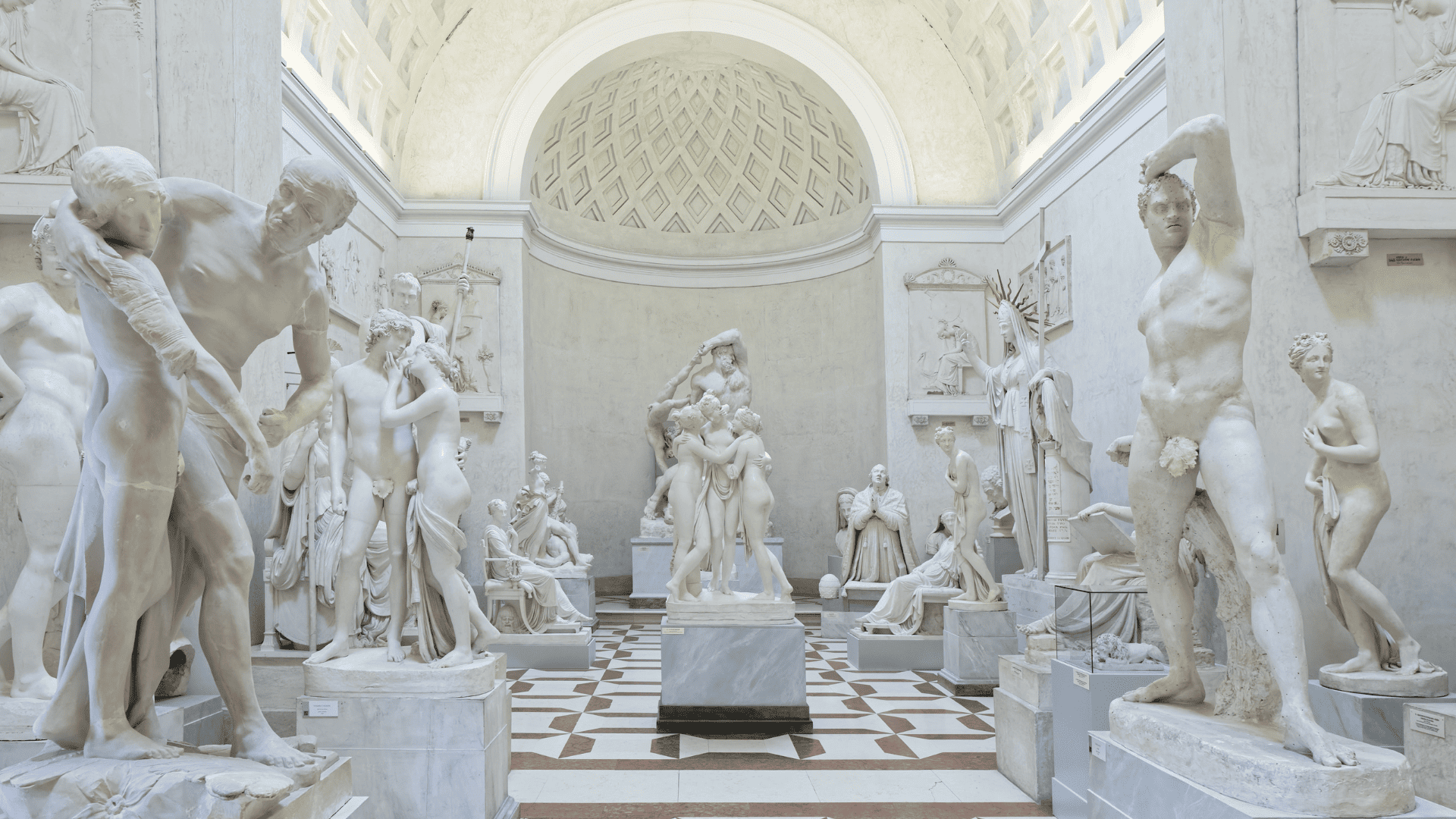
The Gypsotheca Antonio Canova Museum allows you to enter the creative laboratory of the greatest interpreter of Neoclassicism. More than a collection of works, it is the place where the artist's story takes shape, preserving the original plaster models from which many of the famous marbles on display in museums around the world were derived.
The visitor pathway unfolds in several spaces that portray Canova from different perspectives. The Gypsotheca houses the most complete collection of his plaster models in the world, still marked by the nails and references used during the processing. The Birthplace preserves paintings, drawings, letters, clothing, and personal objects, offering a more intimate portrait of the artist. The visit is completed by the Garden, the Brolo, the Library, and the Historical Archive, which keep alive the connection between Canova and the place where he was born.
One of the most surprising elements is the exhibition designed by Carlo Scarpa in the 1950s. The natural light, carefully studied, enhances the surfaces of the plasters and guides the visitor in an experience that places the creative process at the center even more than the finished work.
The museum also tells its own story. During World War I, the Gypsotheca suffered severe damage due to bombings, and some plasters still bear the traces of those wounds, left visible as testimony to the history that these works have undergone.
The visit naturally concludes with the nearby Canovian Temple, designed by Antonio Canova himself, offering the opportunity to learn about the sculptor, the architect, and the man who left a deep mark on the history of art.
<p>Tuesday — Friday 9:30 a.m.–6 p.m. <br>Saturday/Sunday/Public Holidays 9:30 a.m.–7 p.m.<br>Last entry one hour before closing.</p> <p><b>Special Openings</b><br>Public holidays (Easter Monday, April 25, May 1, June 2, August 15, November 1, December 8, December 26)</p> <p><b>Closures</b><br>Weekday Mondays, Christmas, January 1, Easter</p>