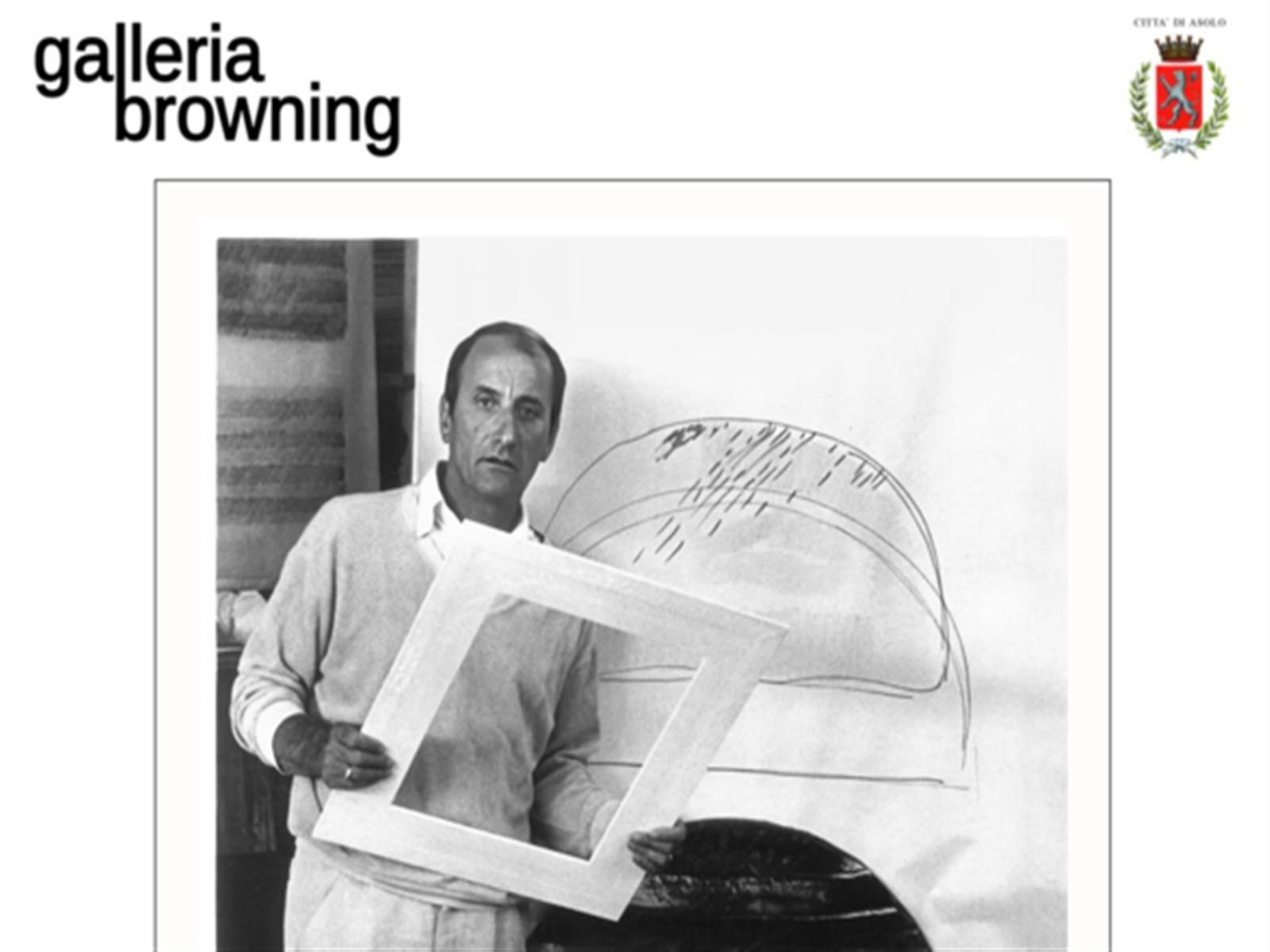
Born in Nove, Pianezzola trained at the "De Fabris" Art School and the Academy of Venice, experiencing the ferment of the neo-avant-garde (Spatialism).
Crucial for his shift towards modernity was the meeting in 1943 with Arturo Martini and Carlo Scarpa.
After a debut linked to traditional painting at the Barettoni factory, in the 1950s he abandoned figuration for an informal and material research, enhancing ceramics, wood, and metals. A celebrated designer and artist, he was highlighted by Gio Ponti in "Domus" for his innovative "environmental ceramics".
As a teacher and director of the Nove Institute of Art, he promotes international dialogue through the Symposium of Ceramics.
His artistic evolution ranges from the geometries of "Fluctuations" to the refined "object-books", to the original use of the Japanese kintsugi technique.
His works are present in the most important museums in Europe and Japan.
Author of significant public monumental works, he has concluded his journey towards a poetics of "lightness", favoring monochromatic and minimalist works.