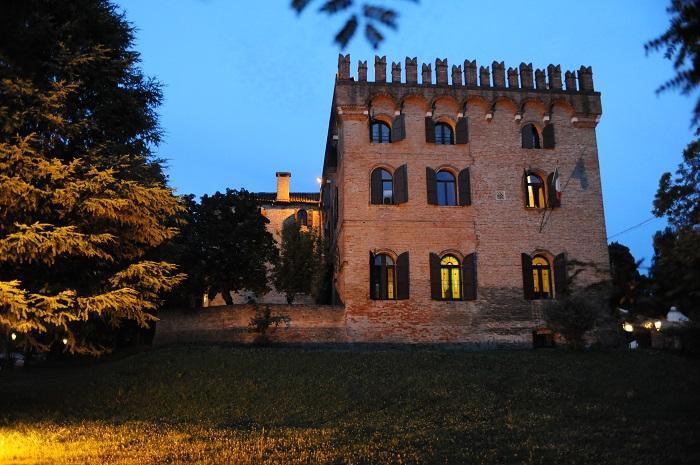
Castello di Stigliano
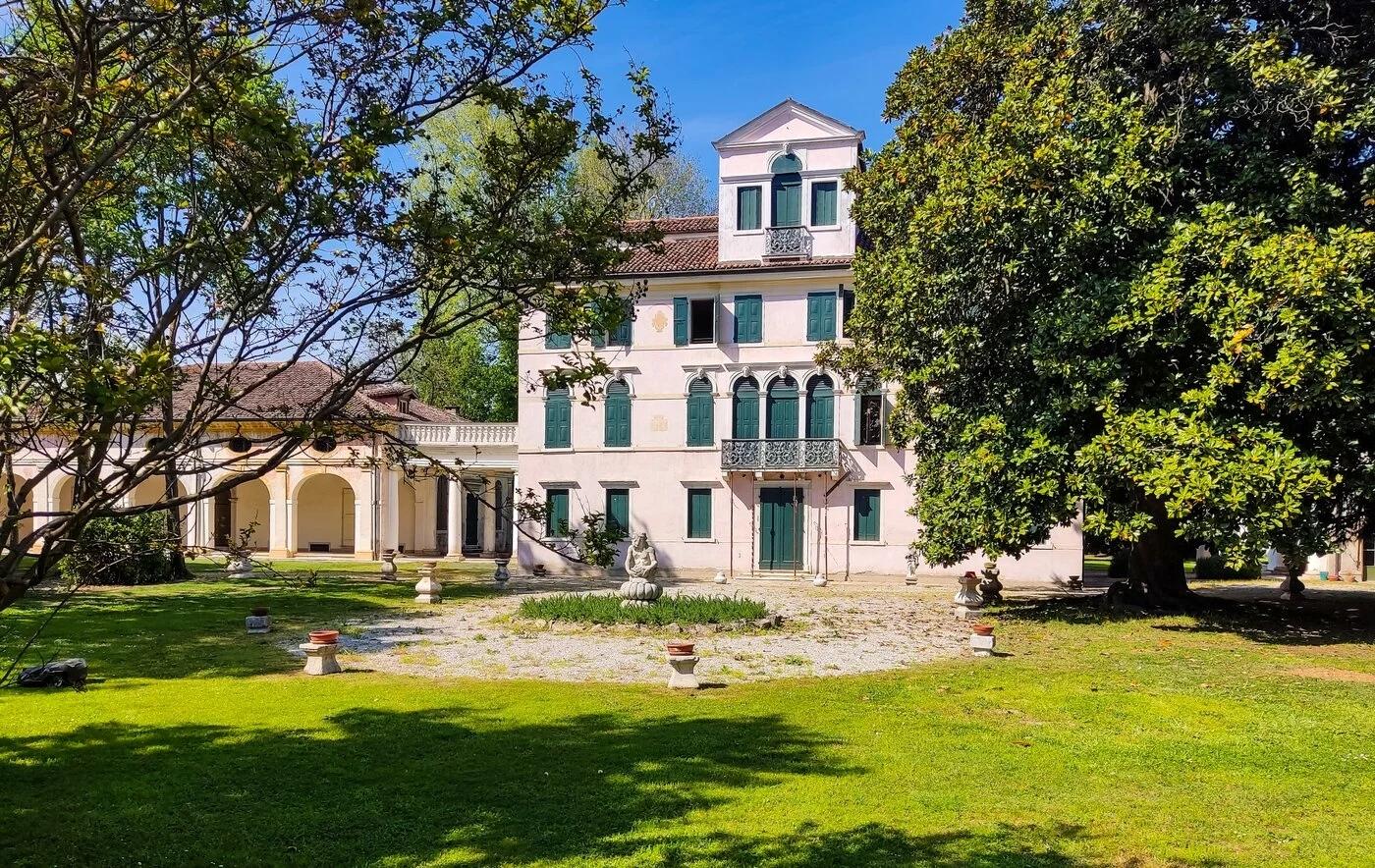
Villa Venier Contarini
The Villa passed into the ownership of the Contarini of San Trovaso and then the Barbarigo of Padua in the 1700s. During that period, Orsetta Barbarigo organized sumptuous parties and performances there. Later, it was inhabited by the Manin, then the Cipollato. Subsequently, the singer Adelaide Borghi-Mauro had it donated to her by an admirer. Between the end of the 19th century and 1955, it was home to other families: Guadalupi, Menin, Rampazzo (1921), and Capuzzo (from 1933 to 1955). It then passed to the Congregation of the Dominican Sisters of Blessed Imelda, and is currently owned by the Veneto Region.
The complex of the Villa, set in a modest park, consists of a central body originally in a square plan, two detached lodges or Barchesse, and an Oratory with adjacent areas on the east side. In the engraving left by Coronelli in 1709, the central body appears to consist of a ground floor, first floor, and a second floor with a loft having square windows and a four-pitched roof. Costa, in his engraving of 1750, shows us instead the second floor with larger proportions and a third floor loft with a cross vault. Currently, the central body has a rectangular plan because in the early 19th century it was enlarged with the addition of small rooms along both sides for the full height. Perhaps this enlargement was the work of architect Carboni, who, and this is certain, added porticoes to connect the two Barchesse to the central body. The left (west) Barchessa or lodge consists of a basement with a vaulted ceiling, three halls decorated with frescoes, and at the front, a portico with five archways now closed off with wooden fixtures. The right (east) Barchessa consists of a hall also decorated with frescoes, stables, warehouses, and on the loft floor, rooms for the staff. It is also equipped with a portico with seven archways, now partially closed off with fixtures and partially (the last two arches) with masonry. The Oratory that currently exists at the southeast corner of the property was rebuilt in 1752.
<b>Special opening first Sundays of the month:</b> from April 2025 to January 2026 from 11:00<br>to 18:00, continuous hours with <b>free admission</b><br>• <b>Regular opening every Saturday and Sunday in the months of April, May, June,</b><br><b>July, September, and October: </b>from 15:00 to 18:00, with <b>paid admission</b><br>according to the opening fee schedule<br>• <b>Special openings for holidays: </b>April 21 (Easter Monday), April 25 (Liberation Day), May 1 (Labor Day), June 2 (Republic Day), November 1 (All Saints' Day), December 8 (Feast of the Immaculate Conception). Continuous hours<br>from 11:00 to 18:00, with <b>paid admission </b>according to the<br>opening fee schedule
A. <b>ADULTS (adults): </b>€. 5.00<br>B. <b>FAMILY GROUPS (Parents and Children):</b><br>• 3 people €. 10.00<br>• 4 people €. 12.00<br>• 5 people €. 15.00<br>• Over 5 people €. 20.00<br>C. <b>UNIVERSITY STUDENT (Italian or foreign): </b>€. 2.00<br>D. <b>REGISTERED with Entities and Associations for the Protection and Enhancement of Cultural,</b><br><b>Environmental, Landscape Heritage in agreement with I.R.V.V.: </b>€. 2.00<br>E. <b>GROUPS (max. 25 people per Group) (beyond this number, groups will be</b><br><b>divided and the visit staggered for protection and safety needs): </b>€. 75.00<br>F. <b>SCHOOL VISITS per class (max 25 people) (beyond this number, groups</b><br><b>will be divided and the visit staggered for protection and safety needs): </b>€<br>25.00<br><b>G. Combined ticket </b>“<b>TOUR of Venetian Villas IRVV” if active and valid until</b><br><b>31.12 of the year of purchase, within the limits of the seasonal opening dates of each</b><br><b>single complex:</b><br>• Villa VENIER-CONTARINI in Mira (VE) Villa POJANA in Pojana Maggiore (VI) Villa NANILOREDAN<br>in Sant’Urbano (PD): €. 10.00<br>• Villa VENIER-CONTARINI in Mira (VE) Villa POJANA in Pojana Maggiore (VI)€. 7.00<br><b>Free: CHILDREN AND TEENS UNDER 18</b><br><b>ADULTS OVER 65</b><br><b>DISABLED and/or FRAIL (people suffering from serious illnesses requiring</b><br><b>life-saving therapies - including one accompanying person)</b><br><b>Pregnant status</b><br><b>Birthday</b><br><b>Wedding anniversary</b>
Villa Michiel, Venier Contarini - Villa Venier Contarini <br>Catalog Number IRVV (Regional Institute of Venetian Villas): A0500004553
Villa Farsetti, Selvatico
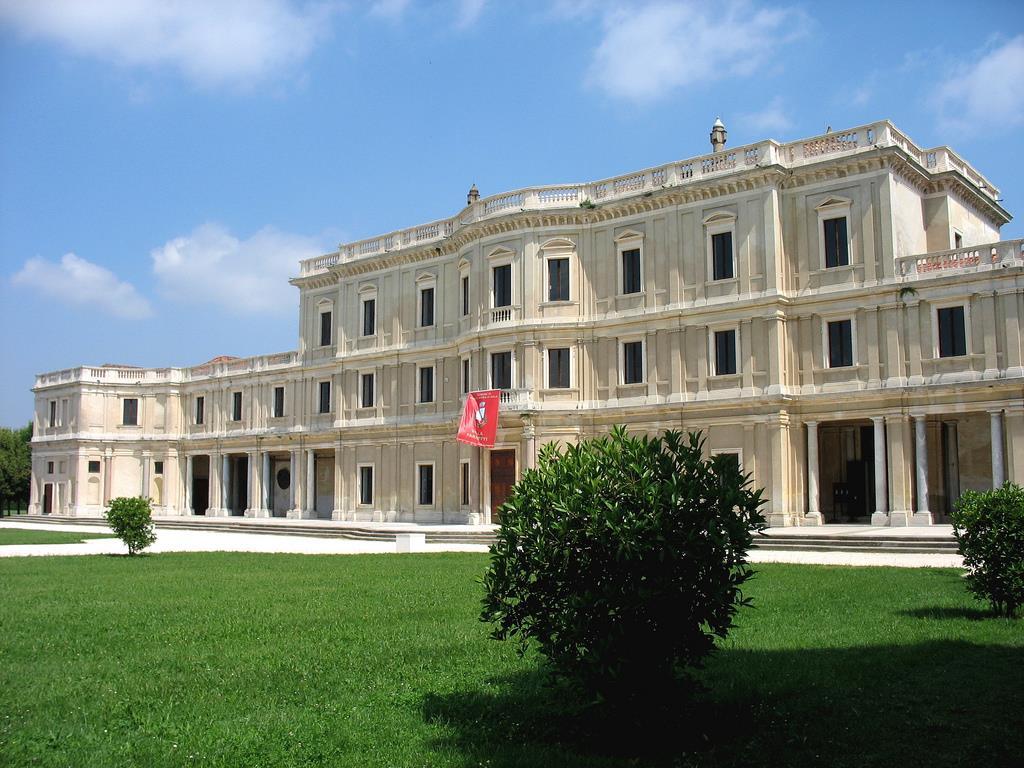
Abbot Farsetti called the architect Paolo Posi from Rome, who designed the majestic palace in Rococo style, adorning it with thirty-eight columns from the Temple of Concord in Rome.
The abbot also had a wonderful garden built, a botanical garden of considerable size and interest, citron orchards, greenhouses, groves, and a maze. On a small hill formed from the excavated material of an oval pond, he erected a small temple that depicted the Roman baths. He then constructed a large earthen embankment (also oval) that he surrounded with a row of yews shaped in an arch to evoke a Roman amphitheater. Nearby, he recreated the remains of the temples of Diana and Jupiter Thunderer.
From all this work, today only the main palace, the guesthouse, two citrus greenhouses, and the stables remain.
Every day from 08:00 to 19:00.
Villa Farsetti, Selvatico<br>Catalog Number IRVV (Regional Institute of Venetian Villas): A0500000664
Museo Nazionale Villa Pisani
The Pisani family of Santo Stefano, responsible for the construction of the villa, was an important branch of the Pisani lineage, an ancient Venetian patrician family. They became immensely wealthy during the fourteenth century thanks to commerce and real estate income, and in the fifteenth century, they became owners of a large estate in the lower Padua and during the same period began the construction of the grand Venetian palace in Campo Santo Stefano (the current "Benedetto Marcello" conservatory), which was completed only in the eighteenth century. This latter century was the family's golden age, reaching the highest offices in the Republic of Venice. Alvise Pisani (1664 - 1741) was an ambassador at the court of the Sun King, who was the godfather of one of his sons, and was later elected doge in 1735. But decline was already on the horizon: the collapse of the Republic (1797) and later the vice of gambling drove the Pisani into ruinous debt. For this reason, they were forced to sell the villa to Napoleon Bonaparte, who became King of Italy in 1805, on January 11, 1807, for 1,901,000 Venetian lire.
The villa was then gifted by Emperor Bonaparte to his stepson Eugène de Beauharnais, viceroy of Italy, who commissioned a series of modernization works that changed the appearance of many rooms in the residence and the park.
In 1814, the fate of Europe, decided at Waterloo, brought the Habsburg imperial family to Villa Pisani, now the rulers of the Lombardo-Veneto kingdom. The residence thus became a preferred summer retreat for Empress of Austria Maria Anna Carolina and hosted the entire elite of European aristocracy, from King of Spain Charles IV, to Tsar of Russia Alexander I, from King of Naples Ferdinand II, to King of Greece Otto, and many others. The brilliant courtly atmosphere came to an end in 1866, when Veneto was annexed to the Kingdom of Italy. The Villa did not become part of the crown properties of the House of Savoy but instead became state property, thereby losing its representative function. No longer inhabited, it became a museum in 1884 and was visited by figures such as Wagner, D'Annunzio (who set a crucial scene of his novel "The Fire" there), Mussolini and Hitler (whose first official meeting took place here in 1934), Pasolini (who filmed a scene of his movie "Porcile" in the villa and the park).
The noble floor, consisting of thirty rooms, preserves frescoes, paintings, and original furnishings. A great splendor is achieved in the ballroom, located at the center of the building. Giambattista Tiepolo, the leading exponent of eighteenth-century painting in Italy, frescoed the Glory of the Pisani family on the ceiling, a masterpiece that survived by miracle, since in the early nineteenth century, it was about to be removed as part of the grand project of modernization of the building wanted by Eugène de Beauharnais. Of particular interest is the Napoleonic apartment, rich in treasures: the grand canopy bed surmounted by the emperor's initial, the splendid chests made by the Lombard inlayer Giuseppe Maggiolini, favored by European courts, the monochromes of Giovanni Carlo Bevilacqua narrating the myth of Eros and Psyche, and the precious Empire-style furniture made especially for Villa Pisani. Inside the Dining Room, the table is set with a service of dishes used by the Napoleonic court.
The park, winner of the award "Most Beautiful Park in Italy 2008", occupies an entire bend of the Naviglio del Brenta, covering as much as 11 hectares with an external perimeter of about 1,500 meters. It was created based on a project by the Padua architect Girolamo Frigimelica de' Roberti. In the eighteenth century, the spectacular view was enhanced by broderies with large colossal statues on either side. The organization of the park for long perspectives recalls the French models applied by André Le Nôtre at Versailles and intersects with the Venetian tradition of the walled garden, open through portals and windows that extend the views over the Brenta. The Austrian nineteenth century will be characterized, however, by great attention paid to potted and planted botany, with tropical greenhouses and the inclusion of large tree specimens, before the revival of the '900 introduced long box hedges and the large water basin of the parterre.

<p><b>From Sunday, October 27, 2024, to Saturday, March 29, 2025</b> the schedule will be as follows:<br><br>- <b>FROM TUESDAY TO THURSDAY</b>, from 9:00 AM to 2:00 PM;<br>- <b>FROM FRIDAY TO SUNDAY and on PUBLIC HOLIDAYS</b>, from 9:00 AM to 6:00 PM (the last entry to the villa and the park is at 5:00 PM, with mandatory exit by 6:00 PM)<br>- <b>WEEKLY CLOSURE</b>: Monday (open on public holidays with closure postponed to Tuesday).</p><p><b>From Sunday, March 30, to October 25, 2025</b> the public opening hours of the museum will be as follows:<br><br>- <b>FROM TUESDAY TO SUNDAY</b> from 9:00 AM to 8:00 PM (the ticket office closes at 7:00 PM) MANDATORY EXIT FROM THE MAIN FLOOR OF THE VILLA BY 7:30 PM<br>- <b>WEEKLY CLOSURE</b>: Monday (open on public holidays with closure postponed to Tuesday).</p><p><b>Last access to the ticket office is allowed one hour before closing</b>.</p>
<p>Open on public holidays, closed on Tuesdays.</p><p><b>Full ticket: </b>€14.00</p><p><b>Park only ticket:</b> €8.00</p><p><b>Reduced ticket Villa + Park:</b> €8.00 (holders of the AREA ARTE CARD and residents of the Union of municipalities of the Riviera del Brenta and Terra del Tiepolo: residents of the municipalities of Campagnalupia, Campolongo, Camponogara, Dolo, Fiesso, Fossò, Martellago, Mira, Mirano, Noale, Noventa Padovana, Pianiga, Salzano, Santa Maria di Sala, Scorzè, Spinea, Stra, Vigonovo).</p><p><b>Reduced ticket Villa + Park: </b>€4.00 (young people aged 18-25).</p><p><br><b>Free ticket</b>: for minors under 18 and as provided by law; Holders of the Venetian Heritage Membership Card, valid for two people, visitors every first Sunday of the month</p><p><br></p><p><br></p>
Villa Pisani, known as "Nazionale" - National Museum Villa Pisani <br>Catalog Number IRVV (Regional Institute of Venetian Villas): A0500001614