Terme and Euganean Hills

External id
13

CA' MANIN

Good morning, we are Roberto and Marisa, the owners of this B&B, a family-run establishment, recently built with eco-friendly construction and designed to provide all the necessary comforts for our guests to enjoy a peaceful stay and total relaxation. For us, details make the difference, and every corner has been prepared to welcome you in the best possible way. Breakfast is served every morning and prepared with love by Marisa.

TERME PARADISO

Hotel Terme Paradiso, a three-star Superior hotel with spa in Abano Terme, welcomes you for a vacation dedicated to wellness and harmony.

The Spa and the swimming pool's thermal water are the perfect place for relaxing and getting your physical shape back. The wellness treatment and the thermal cures are the right way to a complete “remise en forme”.

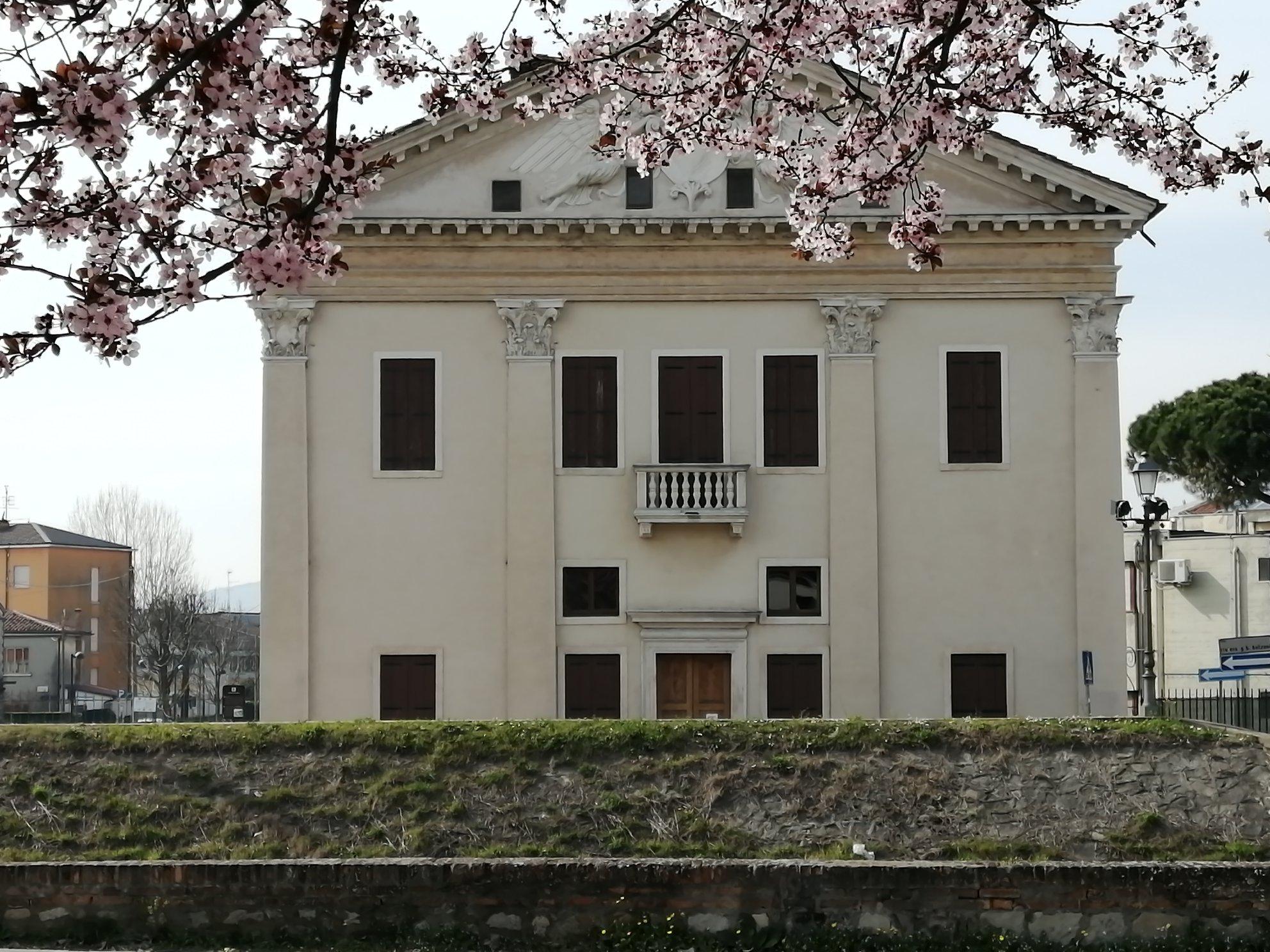
Villa Pisani

Recapito mail
info@villapisanimonselice.it
Coordinate geografiche
45.2435629, 11.7493879
Indirizzo
Riviera Giovanni Battista Belzoni, 22
External ID
0c995282-1b91-4e4b-81df-db474283b8c0
Localita
Area turistica
CAP
35043
Immagine di copertina esterna
Testo alternativo
Villa Pisani Monselice esterno
Orari di apertura

<p>Mon-Tue-Thu&nbsp; 9:00-14:00</p><p>Wed and Fri 9:00-13:00 15:00-17:00</p><p>Sat and Sun 9:00-12:30 14:30-17:30</p><p><b>From August 12 to 18, 2024 closed.</b></p>

Informazioni importanti (nr. catalogo)

Villa Pisani, Serena<br> Catalog Number IRVV (Regional Institute of Venetian Villas): A0500002826

Villa Buzzaccarini

Sottotitolo
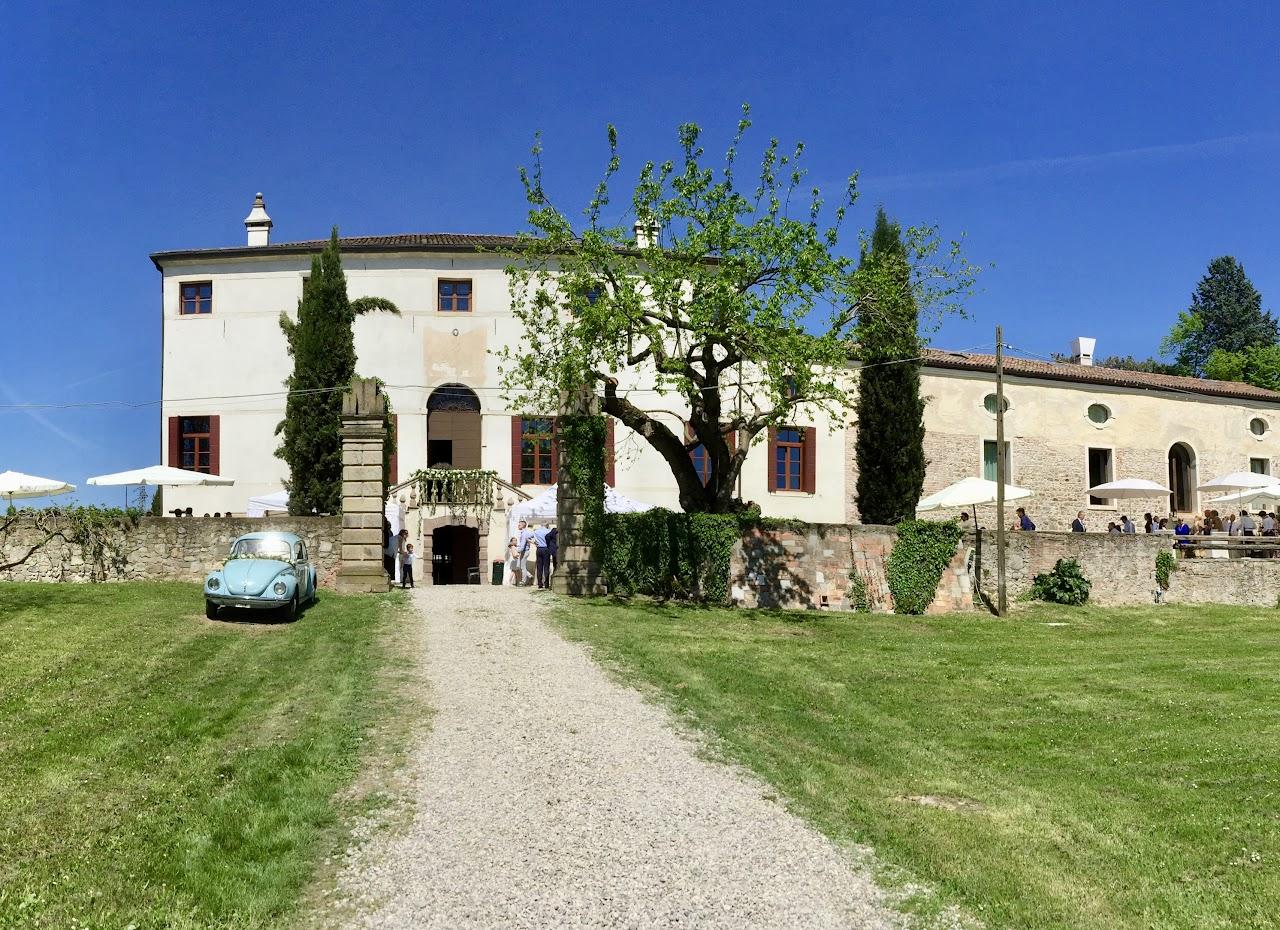
Villa Buzzaccarini dates back to the mid-1500s. For over 400 years, it has hosted events in its park and in its frescoed interior halls.
Recapito telefonico
Recapito mail
borgobuzzaccarini@gmail.com
Coordinate geografiche
45.2293826, 11.7230296
Indirizzo
via Marendole
Descrizione formattata

Villa Buzzaccarini dates back to the mid-1500s, a manor house-castle of the noble Padovan family of Buzzaccarini.

It is surrounded by a large park of over 30 thousand square meters, a perfect place to host various activities: Training Courses, Photo and Film Sets, Sports and Recreational Events.

The interior of the villa consists of various halls: The noble floor, entirely frescoed, the central hall, and four side rooms. The frescoes depict landscapes, villages, countryside, putti, and auspicious symbols.

Today, in addition to being a private residence, the Villa is designated for hospitality for weddings, conferences, study seminars, and television shoots, under the name "Borgo Buzzaccarini."
External ID
b231526b-7de4-46ee-a8e8-d4ace80ea821
Localita
Area turistica
CAP
35043
Immagine di copertina esterna
Informazioni importanti (nr. catalogo)

Villa Buzzaccarini - Villa Buzzaccarini <br>Catalog Number IRVV (Regional Institute of Venetian Villas): A0500003760

Villa Draghi

Sottotitolo
Neogothic-style villa on two floors, it is an elegant building constructed between 1848 and 1850 by Pietro Scapin. Equipped with a magnificent terrace and a view of the spa town, as well as a 30-hectare park from which some hiking trails begin.
Coordinate geografiche
45.3244466, 11.7735431
Indirizzo
Via Fermi,1
Descrizione formattata

Villa Draghi was built on a pre-existing 17th-century building as a private villa, demolished to construct the current complex in 1848, featuring the villa-castle style spread over two floors and a basement. Over time, it lost valuable decorative elements, fixtures, and statues due to neglect and the lack of care from the Municipality that was supposed to safeguard them.

The Park and the Villa are located on the slope of one of the hundred hills that characterize the Euganean Hills, 10 km from Padua and 40 km from Venice. The rustic annexes are found at the foot of Monte Alto and at the entrance gate of the Euganean Hills Regional Park.

Patches of woodland surround small clearings crossed by paths that offer a variety of perspective effects along the way: scenes with wide views alternate with brief glimpses that open and close among trees, meadows, and bushes with changing rapidity.

The Villa is situated at the top of a hill, from which one can enjoy a splendid view of the natural amphitheater of the plain dotted with inhabited areas, watercourses, thermal springs, and agricultural land. This view is made possible by the visual permeability of the area in front, which is currently free of buildings and visual barriers. Behind the Villa, the mountain continues its ascent, providing a backdrop.

The Villa Draghi complex is publicly owned by the Municipality of Montegrotto Terme, which acquired it from the Jesuits of Venice in 1972. The Jesuits had received it as a donation from Giovannina Draghi (the last private owner since 1962, after whom it is named).

External ID
40dc2473-bbcc-40b9-b01b-a4eec4fcc2f0
Area turistica
CAP
35036
Immagine di copertina esterna

Casa del Petrarca

Sottotitolo
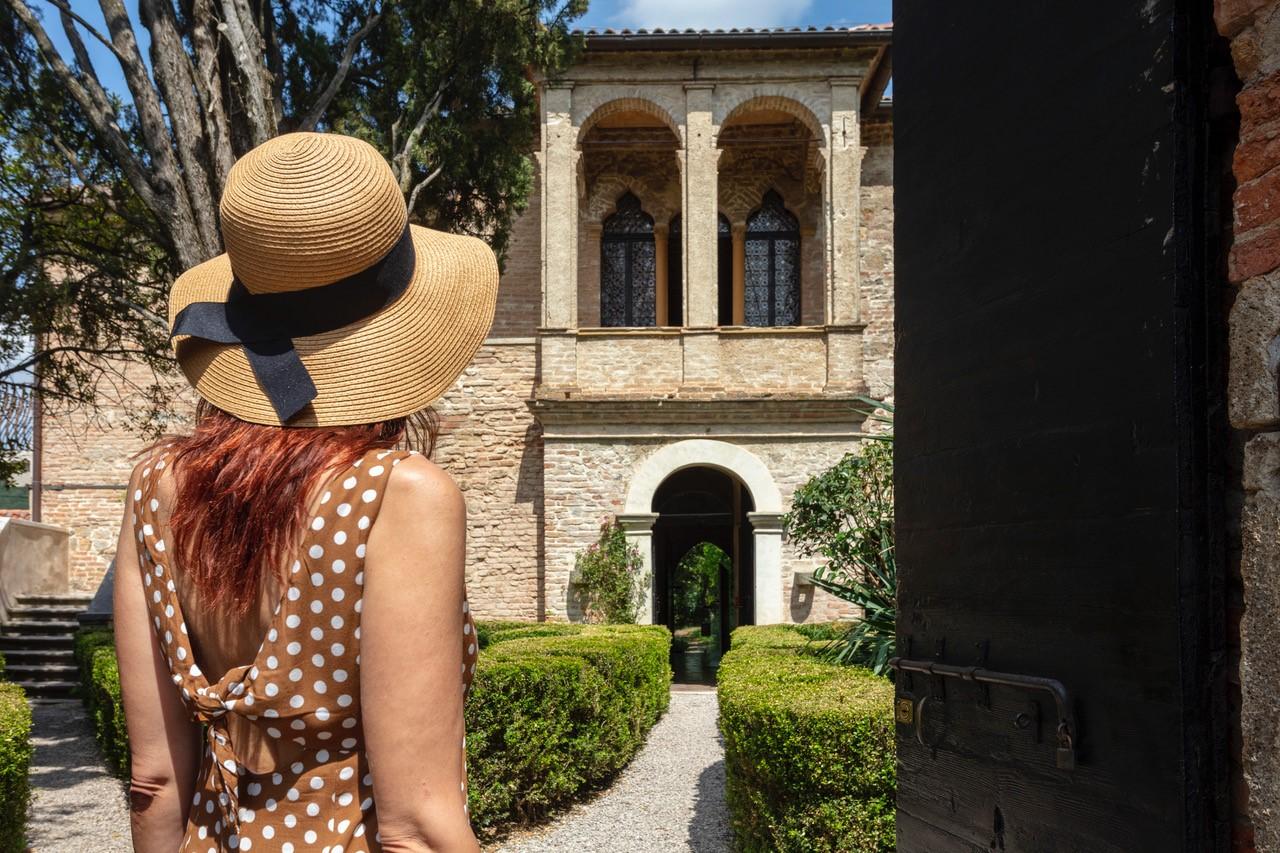
The Casa del Petrarca, the former home of the great poet Petrarch, is set in the leafy countryside between two kitchen gardens, the ‘citerior’ at the front of the house and the ‘ulterior’ at the rear. It is a 15th century villa which has been fully restored. It was once the home of the famous poet Petrarch.
Coordinate geografiche
45.270737148902, 11.715527667212
Indirizzo
Via Valesselle
Descrizione formattata
The entrance to the Casa del Petrarca is through an archway into the first kitchen garden called the Citerior, where Petrarch loved growing laurel, vines, apples and pears, and aromatic plants which were particularly important to him. Visitors today are still greeted by a whole host of plants, such as the small boxwood shrubs arranged to create a little maze. The house was not built by Petrarch himself, it pre-dates his arrival in the village. The story goes that it was donated to him by the Lord of Padua, Francesco il Vecchio da Carrara. Petrarch did make some changes to the house, adding some windows to the façade and turning it into a single dwelling with two living spaces, keeping the downstairs one for him and his family and leaving the upstairs one for the servants. After his death, further changes were made to the house. In the middle of the 16th century, the Paduan nobleman Pietro Paolo Valdezocco improved the rustic home by adding an attractive loggia in the Renaissance style and an external staircase. In the rooms on the upper floor, he had frescoes painted depicting scenes inspired by Petrarch’s works including Il Canzoniere, I Trionfi and Africa and decorated the fireplaces.
External ID
cc12335b-e5bb-49fa-8907-8f6bf69ea3c9
Localita
Area turistica
CAP
35032
Immagine di copertina esterna
Orari di apertura

<p>For more information about opening hours, check the website.</p>

Informazioni importanti (nr. catalogo)

Petrarch's House <br>Catalog Number IRVV (Regional Institute of Venetian Villas): A0500003634

Villa Cornaro Farsetti Benvenuti

Sottotitolo
The first news about the complex now called Villa Benvenuti dates back to the early 16th century, when the Venetian patron Alvise Cornaro inherited from his uncle Alvise Angeglieri the estate on the hill overlooking Este. Cornaro decided not only to construct a building but also to work on the garden to create an open-air theater in the Greek style. Outstanding features of the villa: Triumphal arch attributed to Falconetto; Park whose architecture is attributed to Giuseppe Jappelli, Villa, greenhouse, and stables.&nbsp;
Recapito telefonico
Recapito mail
info@scautesteonlus.org
Coordinate geografiche
45.231079734664, 11.655412936771
Indirizzo
Via Cappuccini, 12
Descrizione formattata

The first news about the complex that today is called Villa Benvenuti dates back to the early 16th century, when the Venetian patron Alvise Cornaro inherited from his uncle Alvise Angeglieri the estate on the hill overlooking Este. Cornaro decided not only to create a building but also to work on the garden to establish an open-air theater in the Greek style.

He entrusted the task to the Veronese architect Gian Maria Falconetto, of whose intervention the triumphal arch remains.

At the beginning of the 1700s, the property passed to the Farsetti family. The enlargement of what was Cornaro's small building into a form similar to the current one is probably due to the Farsetti.

The arrangement of the Park in its current forms was initiated in the mid-1800s by Adolfo Benvenuti: it is likely that he entrusted the task to Giuseppe Jappelli. In addition to the park, the intervention also involved the pine forest above, which constitutes a peculiar profile of the city of Este.

Excellences of the villa: Triumphal arch attributed to Falconetto; Park whose architecture is attributed to Giuseppe Jappelli Villa, greenhouse, and stables.


External ID
6cc8cafd-c8af-4783-b62c-8b9b119557b4
Localita
Area turistica
CAP
35042
Immagine di copertina esterna
Testo alternativo
Villa Benvenuti Copyright Enrico Fontana
Orari di apertura

<p>Opening hours<b>: </b>By appointment</p> <p><i></i>Visits:<b> </b>Park and stables of the Villa</p>&nbsp;&nbsp;&nbsp;&nbsp;&nbsp;&nbsp;&nbsp;&nbsp;&nbsp;&nbsp;&nbsp; <p><br></p>

Informazioni importanti (nr. catalogo)

Villa Cornaro, Farsetti, Benvenuti - Villa Benvenuti Cornaro <br>Catalog Number IRVV (Regional Institute of Venetian Villas): A0500002802

Villa Barbarigo Pizzoni Ardemani

Coordinate geografiche
45.2923714, 11.7271908
Indirizzo
Via Diana,2
Descrizione formattata
In Galzignano Terme, in the location of Valsanzibio, lies the most complete of the ancient Venetian gardens, characterized by a preference for flat expanses and fully structured on an architectural design that complements that of the building to which they belong. Inside is Villa Barbarigo, and in front of it, there is a theatrical Baroque exedra with a staircase in the center leading up to an avenue of centuries-old cypress trees that ascends to Monte Gallo. In the garden, nature and art merge. You pass through the monumental portal of Diana, the main entrance by water; here was the landing for boats that arrived through the valley from Sant'Eusebio's fishing grounds, from which the toponym Val-San-Zibio is derived. Once in the garden, you encounter the Fishponds of the Rivers and Winds separated by the Fountain of Iris. The labyrinth mainly presents a symbolic structure found in many other Renaissance and Baroque monuments. This prestigious labyrinth, like the entire Garden of Valsanzibio, visualizes and experientially represents the path of human life. The Isle of Rabbits consists of a small elliptical island slightly elevated, where rabbits are allowed to proliferate freely. In the center of the island stands a hexagonal pavilion topped by a metal mesh dome for the protection of birds. This place represents a happy state, but at the same time, a closed place, like a cave, womb, or tomb, it protects but also confines.
External ID
735edb76-bbdc-4f93-ad51-a0eb7f677666
Localita
Area turistica
CAP
35030
Immagine di copertina esterna
Orari di apertura

<p>For more information on opening hours, check the Villa's website.</p>

Informazioni importanti (nr. catalogo)

Villa Barbarigo, Pizzoni Ardemani - Villa Barbarigo Pizzoni Ardemani - Valsanzibio <br>Catalog Number IRVV (Regional Institute of Venetian Villas): A0500003672