Terme and Euganean Hills

External id
13

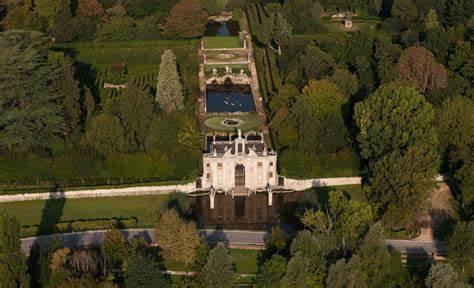
Villa Pisani

Recapito mail
info@villapisanimonselice.it
Coordinate geografiche
45.2435629, 11.7493879
Indirizzo
Riviera Giovanni Battista Belzoni, 22
External ID
0c995282-1b91-4e4b-81df-db474283b8c0
Localita
Area turistica
CAP
35043
Immagine di copertina esterna
Testo alternativo
Villa Pisani Monselice esterno
Orari di apertura

<p>Mon-Tue-Thu&nbsp; 9:00-14:00</p><p>Wed and Fri 9:00-13:00 15:00-17:00</p><p>Sat and Sun 9:00-12:30 14:30-17:30</p><p><b>From August 12 to 18, 2024 closed.</b></p>

Informazioni importanti (nr. catalogo)

Villa Pisani, Serena<br> Catalog Number IRVV (Regional Institute of Venetian Villas): A0500002826

Villa Buzzaccarini

Sottotitolo
Villa Buzzaccarini dates back to the mid-1500s. For over 400 years, it has hosted events in its park and in its frescoed interior halls.
Recapito telefonico
Recapito mail
borgobuzzaccarini@gmail.com
Coordinate geografiche
45.2293826, 11.7230296
Indirizzo
via Marendole
Descrizione formattata

Villa Buzzaccarini dates back to the mid-1500s, a manor house-castle of the noble Padovan family of Buzzaccarini.

It is surrounded by a large park of over 30 thousand square meters, a perfect place to host various activities: Training Courses, Photo and Film Sets, Sports and Recreational Events.

The interior of the villa consists of various halls: The noble floor, entirely frescoed, the central hall, and four side rooms. The frescoes depict landscapes, villages, countryside, putti, and auspicious symbols.

Today, in addition to being a private residence, the Villa is designated for hospitality for weddings, conferences, study seminars, and television shoots, under the name "Borgo Buzzaccarini."

External ID
b231526b-7de4-46ee-a8e8-d4ace80ea821
Localita
Area turistica
CAP
35043
Immagine di copertina esterna
Informazioni importanti (nr. catalogo)

Villa Buzzaccarini - Villa Buzzaccarini <br>Catalog Number IRVV (Regional Institute of Venetian Villas): A0500003760

Casa del Petrarca

Sottotitolo
The Casa del Petrarca, the former home of the great poet Petrarch, is set in the leafy countryside between two kitchen gardens, the ‘citerior’ at the front of the house and the ‘ulterior’ at the rear. It is a 15th century villa which has been fully restored. It was once the home of the famous poet Petrarch.
Coordinate geografiche
45.270737148902, 11.715527667212
Indirizzo
Via Valesselle
Descrizione formattata
The entrance to the Casa del Petrarca is through an archway into the first kitchen garden called the Citerior, where Petrarch loved growing laurel, vines, apples and pears, and aromatic plants which were particularly important to him. Visitors today are still greeted by a whole host of plants, such as the small boxwood shrubs arranged to create a little maze. The house was not built by Petrarch himself, it pre-dates his arrival in the village. The story goes that it was donated to him by the Lord of Padua, Francesco il Vecchio da Carrara. Petrarch did make some changes to the house, adding some windows to the façade and turning it into a single dwelling with two living spaces, keeping the downstairs one for him and his family and leaving the upstairs one for the servants. After his death, further changes were made to the house. In the middle of the 16th century, the Paduan nobleman Pietro Paolo Valdezocco improved the rustic home by adding an attractive loggia in the Renaissance style and an external staircase. In the rooms on the upper floor, he had frescoes painted depicting scenes inspired by Petrarch’s works including Il Canzoniere, I Trionfi and Africa and decorated the fireplaces.
External ID
cc12335b-e5bb-49fa-8907-8f6bf69ea3c9
Localita
Area turistica
CAP
35032
Immagine di copertina esterna
Orari di apertura

<p>For more information about opening hours, check the website.</p>

Informazioni importanti (nr. catalogo)

Petrarch's House <br>Catalog Number IRVV (Regional Institute of Venetian Villas): A0500003634

Villa Draghi

Sottotitolo
Neogothic-style villa on two floors, it is an elegant building constructed between 1848 and 1850 by Pietro Scapin. Equipped with a magnificent terrace and a view of the spa town, as well as a 30-hectare park from which some hiking trails begin.
Coordinate geografiche
45.3244466, 11.7735431
Indirizzo
Via Fermi,1
Descrizione formattata

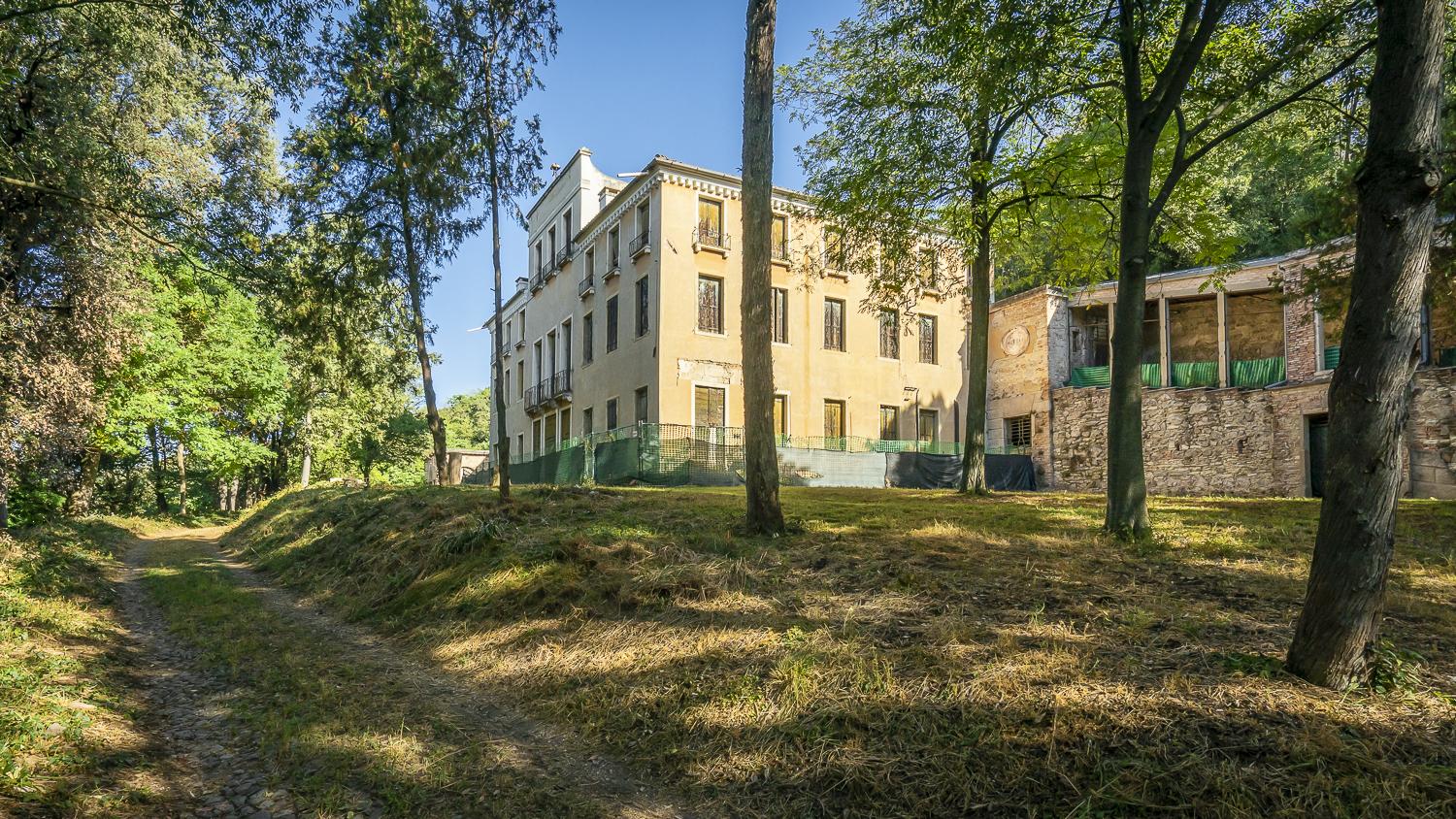
Villa Draghi was built on a pre-existing 17th-century building as a private villa, demolished to construct the current complex in 1848, featuring the villa-castle style spread over two floors and a basement. Over time, it lost valuable decorative elements, fixtures, and statues due to neglect and the lack of care from the Municipality that was supposed to safeguard them.

The Park and the Villa are located on the slope of one of the hundred hills that characterize the Euganean Hills, 10 km from Padua and 40 km from Venice. The rustic annexes are found at the foot of Monte Alto and at the entrance gate of the Euganean Hills Regional Park.

Patches of woodland surround small clearings crossed by paths that offer a variety of perspective effects along the way: scenes with wide views alternate with brief glimpses that open and close among trees, meadows, and bushes with changing rapidity.

The Villa is situated at the top of a hill, from which one can enjoy a splendid view of the natural amphitheater of the plain dotted with inhabited areas, watercourses, thermal springs, and agricultural land. This view is made possible by the visual permeability of the area in front, which is currently free of buildings and visual barriers. Behind the Villa, the mountain continues its ascent, providing a backdrop.

The Villa Draghi complex is publicly owned by the Municipality of Montegrotto Terme, which acquired it from the Jesuits of Venice in 1972. The Jesuits had received it as a donation from Giovannina Draghi (the last private owner since 1962, after whom it is named).
External ID
40dc2473-bbcc-40b9-b01b-a4eec4fcc2f0
Area turistica
CAP
35036
Immagine di copertina esterna

Villa Barbarigo Pizzoni Ardemani

Coordinate geografiche
45.2923714, 11.7271908
Indirizzo
Via Diana,2
Descrizione formattata
In Galzignano Terme, in the location of Valsanzibio, lies the most complete of the ancient Venetian gardens, characterized by a preference for flat expanses and fully structured on an architectural design that complements that of the building to which they belong. Inside is Villa Barbarigo, and in front of it, there is a theatrical Baroque exedra with a staircase in the center leading up to an avenue of centuries-old cypress trees that ascends to Monte Gallo. In the garden, nature and art merge. You pass through the monumental portal of Diana, the main entrance by water; here was the landing for boats that arrived through the valley from Sant'Eusebio's fishing grounds, from which the toponym Val-San-Zibio is derived. Once in the garden, you encounter the Fishponds of the Rivers and Winds separated by the Fountain of Iris. The labyrinth mainly presents a symbolic structure found in many other Renaissance and Baroque monuments. This prestigious labyrinth, like the entire Garden of Valsanzibio, visualizes and experientially represents the path of human life. The Isle of Rabbits consists of a small elliptical island slightly elevated, where rabbits are allowed to proliferate freely. In the center of the island stands a hexagonal pavilion topped by a metal mesh dome for the protection of birds. This place represents a happy state, but at the same time, a closed place, like a cave, womb, or tomb, it protects but also confines.
External ID
735edb76-bbdc-4f93-ad51-a0eb7f677666
Localita
Area turistica
CAP
35030
Immagine di copertina esterna
Orari di apertura

<p>For more information on opening hours, check the Villa's website.</p>

Informazioni importanti (nr. catalogo)

Villa Barbarigo, Pizzoni Ardemani - Villa Barbarigo Pizzoni Ardemani - Valsanzibio <br>Catalog Number IRVV (Regional Institute of Venetian Villas): A0500003672

Villa Cornaro Farsetti Benvenuti

Sottotitolo
Villa Cornaro Farsetti Benvenuti, on the hill of Este, was built in the 16th century by Alvise Cornaro and the arch of Falconetto. Between the 18th and 19th centuries, it was expanded and enriched, featuring a romantic park possibly designed by Jappelli. Today, it combines history, architecture, and landscape in the Euganean Hills.
Recapito telefonico
Recapito mail
info@scautesteonlus.org
Coordinate geografiche
45.231079734664, 11.655412936771
Indirizzo
Via Cappuccini, 12
Descrizione formattata

Perched on the hill overlooking Este, Villa Cornaro Farsetti Benvenuti is a historic complex that combines Renaissance, 18th-century transformations, and romantic landscape, maintaining a strong connection with Euganean culture.

Its origins date back to the early 1500s, when Alvise Cornaro, a refined Venetian patron, envisioned a residence dedicated to art and beauty. This period saw the creation of the elegant triumphal arch attributed to Giovanni Maria Falconetto, which still marks the monumental entrance of the villa today.

In the 1700s, the property passed to the Farsetti family, who expanded and redefined the complex according to the taste of the time, maintaining its architectural balance and prestige. By the mid-1800s, under Adolfo Benvenuti, the villa entered a new phase: the large park was arranged, likely following a landscaping scheme linked to Giuseppe Jappelli, master of the Venetian romantic garden.

The result is a scenic park that extends to the hillside pine forest, rich in pathways, perspectives, and natural atmospheres. The complex also includes the villa, greenhouse, and stables, testimonies to the various historical phases and noble residential functions.

Today, Villa Cornaro Farsetti Benvenuti represents a place of great charm, where architecture, nature, and history intertwine in a narrative spanning five centuries, offering one of the most suggestive views of Este and the Euganean Hills.


External ID
6cc8cafd-c8af-4783-b62c-8b9b119557b4
Localita
Area turistica
CAP
35042
Immagine di copertina esterna
Testo alternativo
Villa Benvenuti Copyright Enrico Fontana
Orari di apertura

<p>Opening hours<b>: </b>By appointment</p> <p><i></i>Visits:<b> </b>Park and stables of the Villa</p>&nbsp;&nbsp;&nbsp;&nbsp;&nbsp;&nbsp;&nbsp;&nbsp;&nbsp;&nbsp;&nbsp; <p><br></p>

Informazioni importanti (nr. catalogo)

Villa Cornaro, Farsetti, Benvenuti - Villa Benvenuti Cornaro <br>Catalog Number IRVV (Regional Institute of Venetian Villas): A0500002802

Il Castello di San Pelagio

Sottotitolo
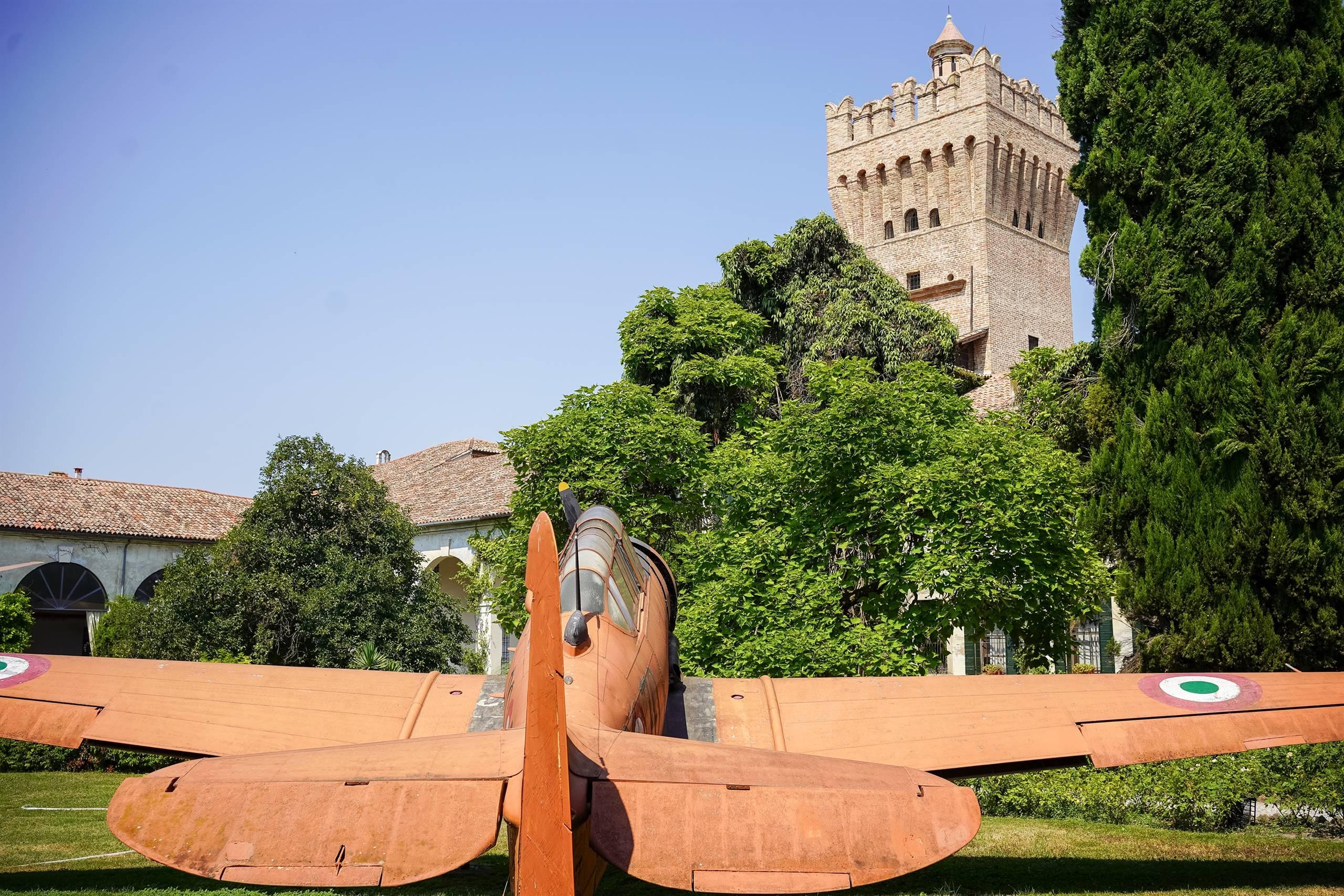
The 18th-century villa Zaborra-Avesani better known as Castello di San Pelagio, was built on the remnants of a military outpost of the Carraresi. The original structure features the impressive crenellated tower (14th century), flanked by two wings of the palace with doorways surmounted by pediments. The noble residence, now the Museum of Flight, is famous for having hosted the "Serenissima" squadron which on August 9, 1918, undertook the historic flight over Vienna, under the command of the poet Gabriele d'Annunzio. The complex includes a monumental historical garden with a maze, an ice house, and a small lake.
Recapito mail
info@castellodisanpelagio.it
Coordinate geografiche
45.3142766, 11.821863
Indirizzo
Via San Pelagio,50
Descrizione formattata

SAN PELAGIO CASTLE
The imposing crenellated tower was built in the 14th century at the behest of the Da Carrara family, lords of Padua. In 1752, the Counts Zaborra acquired the property, expanded the complex by creating the agricultural outbuildings, and modernized the main wing to adapt it as a noble residence. From here, on August 9, 1918, poet Gabriele d'Annunzio embarked on his insane Flight to Vienna, where he carried out his famous exploits. In the d'Annunzio rooms, everything has returned to how it was then. Other areas host a unique Museum in Europe that traces the fascinating history of flight with immersive multimedia islands that make the visit an emotional experience... here is the charm of this unparalleled Place!


FLIGHT MUSEUM
Inaugurated on September 20, 1980, it is developed in the two wings of San Pelagio Castle, the noble and the rustic. Through thematic sections, it retraces the main milestones in the evolution of the means that have led mankind to discover the sky and space. In the ancient granaries, cellars, and residential rooms of the Zaborra Family, stories of mythical flights, visionary scientists, balloons, airships, airplanes, seaplanes, and spacecraft are told.

D'ANNUNZIO ROOMS
In the summer of 1917, the Zaborra family signed a rental agreement with the Italian army for the establishment of an airfield and the occupation of part of the villa. The apartments on the first floor became the residence of Major Gabriele d'Annunzio. The Rooms, restored according to archival sources, are now open to visitors. They house mementos of the poet-soldier’s life and flight, along with the furnishings of the Zaborra family.


ROSE AND LABYRINTH PARK
A three-hectare park, included in the circuit of the Great Italian Gardens. In April, the wisteria blooms, and in May, the scent of a thousand roses: the Representative Garden between the two wings of the villa, the Secret Garden and its treasures, the Brolo, the Ice House, the Labyrinths, the avenue of century-old hornbeams, and the romantic pond,
External ID
76f94017-c053-4397-8b4e-5acf7bf91ce9
Localita
Area turistica
CAP
35020
Immagine di copertina esterna
Orari di apertura

<p>For more information on opening hours, check the museum's website.</p>

Informazioni importanti (nr. catalogo)

<p>Villa Zaborra, known as "Castello di San Pelagio" <br>Catalog Number IRVV (Regional Institute of Venetian Villas): A0500000521</p>

Villa Paruta, Malgara
Sottotitolo
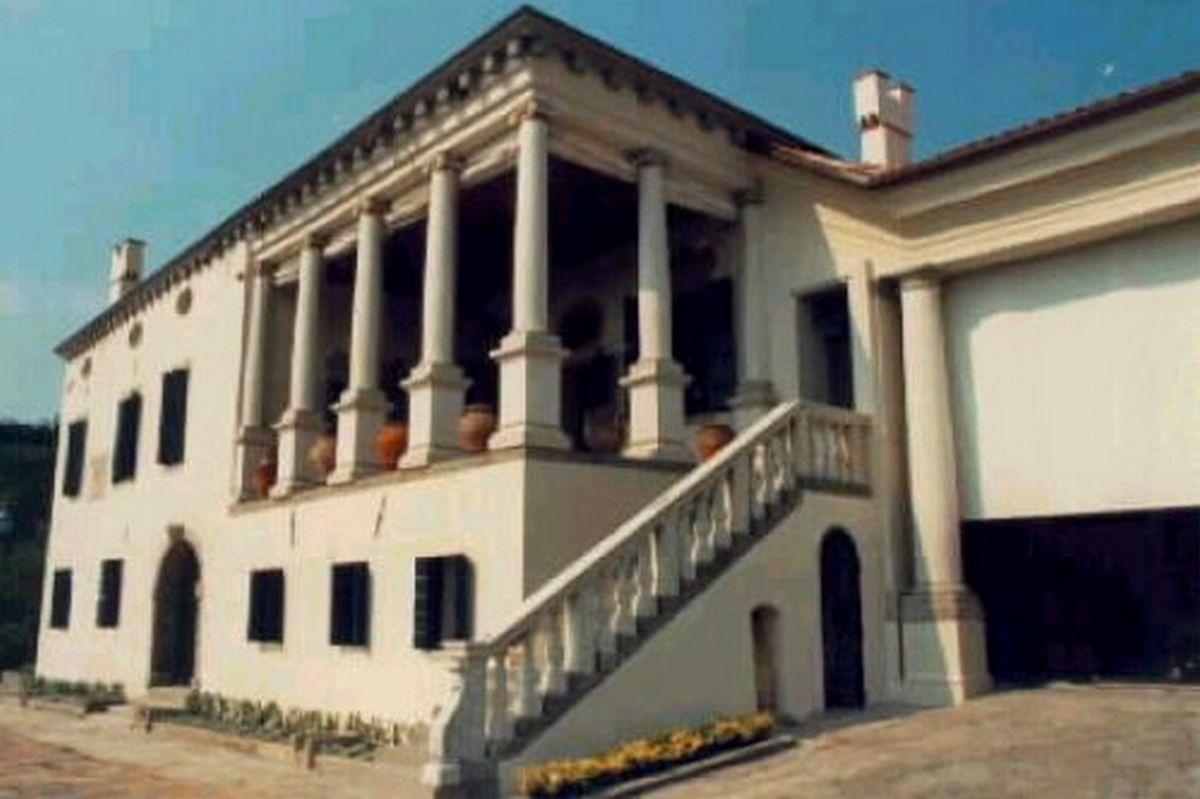
Villa Paruta, built in the sixteenth century by the homonymous Venetian family, is the only survivor of a vast rural complex. Likely attributed to Palladio or his school, it retains frescoes from the 16th century and an elegant portico with a loggia, in the heart of the Euganean Hills.
Coordinate geografiche
0, 0
Indirizzo
Via Bagnara Alta, 11
External ID
ff4d0de1-5efd-4f6e-ba5f-1bdba73f71e5
Localita
Area turistica
CAP
Vo'
Immagine di copertina esterna
Informazioni importanti (nr. catalogo)

Villa Paruta Malgara<br> Catalog Number IRVV (Regional Institute of Venetian Villas): A0500001343

Villa Ferrian

Sottotitolo
Villa Ferrian, in the Euganean Hills, probably dates back to the 11th century as a defensive tower house. The dovecote tower, the ancient community well, and the rural courtyard stand out. Located in the Euganean Hills Park, it benefits from a valuable naturalistic and panoramic context.
Recapito mail
info@villaferrian.it
Coordinate geografiche
45.3389169, 11.6487531
Indirizzo
Via Ca' Mariani, 1189
Descrizione formattata

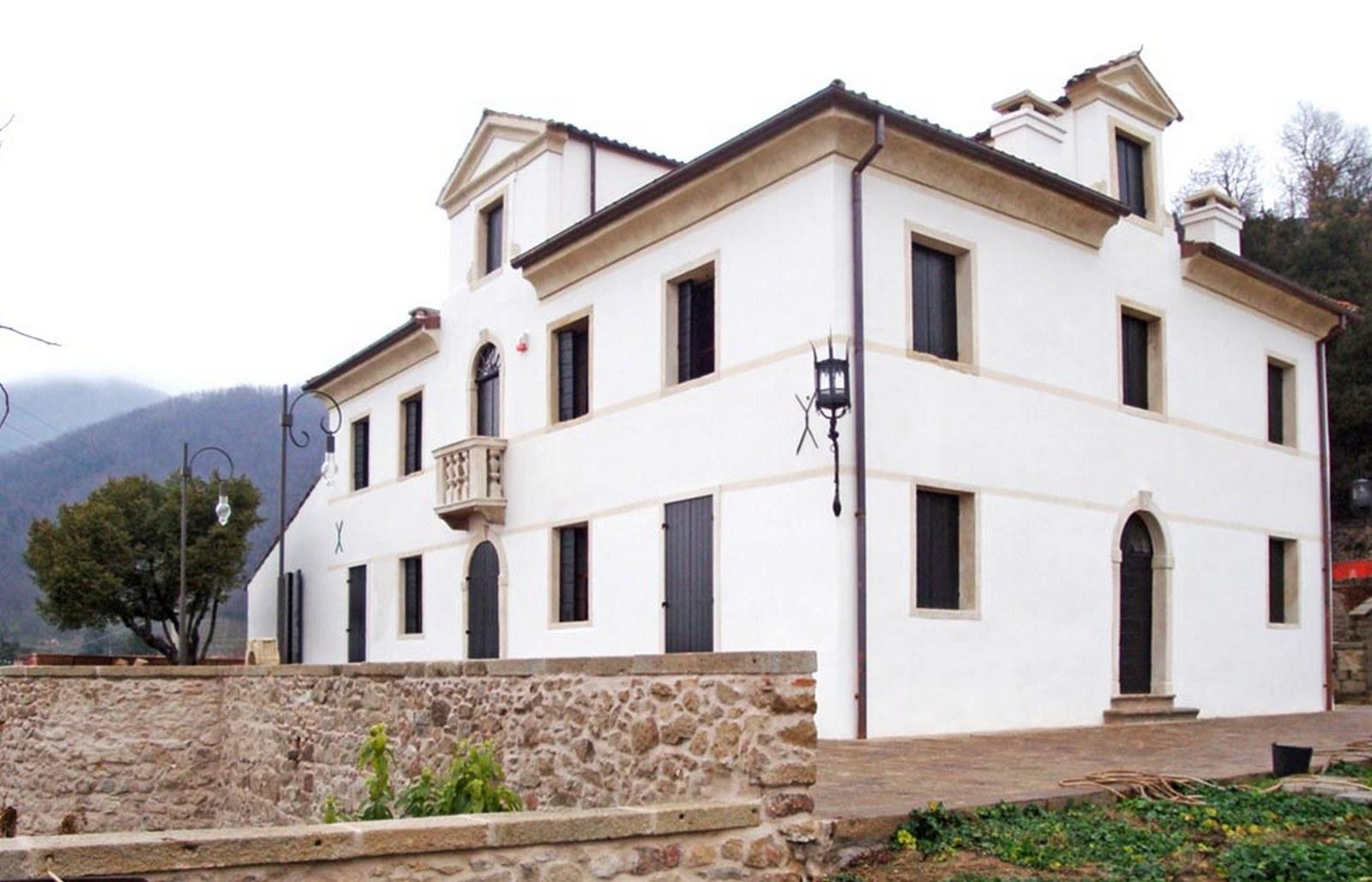
Villa Ferrian, located in the Euganean Hills with a panoramic view of the valley, is a historical complex of great architectural and landscape interest. The presence of a pigeon tower, derived from an ancient defensive observation structure, and the irregular arrangement of the property's buildings – villa, barn, farmhouse, and pigeon tower – suggest very ancient origins. According to studies by architect Piera Treu, the original core may have been a tower house linked to the defensive system of the castles of Boccon and Castelnuovo, dating back to the 11th century.

One of the most characteristic elements of the complex is the internal courtyard, surrounded by buildings historically designated for residence and agricultural activities. Of particular value is the ancient community well, once used by the residents of the district. The structure features unusual extraction openings on different levels, including an elegant stone and brick entrance open in the retaining wall of the embankment.

The villa also enjoys a privileged location, with wide views towards the Berici Hills and an environmental context of great value. Located in the Regional Park of the Euganean Hills, it is surrounded by nature trails, the cycling ring of the Euganean Hills, historic Venetian villas, and numerous wineries that enhance the region's food and wine tradition.
External ID
51d822b2-758c-4480-9b46-11f6d0112086
Localita
Area turistica
Immagine di copertina esterna
Informazioni importanti (nr. catalogo)

Villa Ferrian<br>Catalog Number IRVV (Regional Institute of Venetian Villas): A0500001330

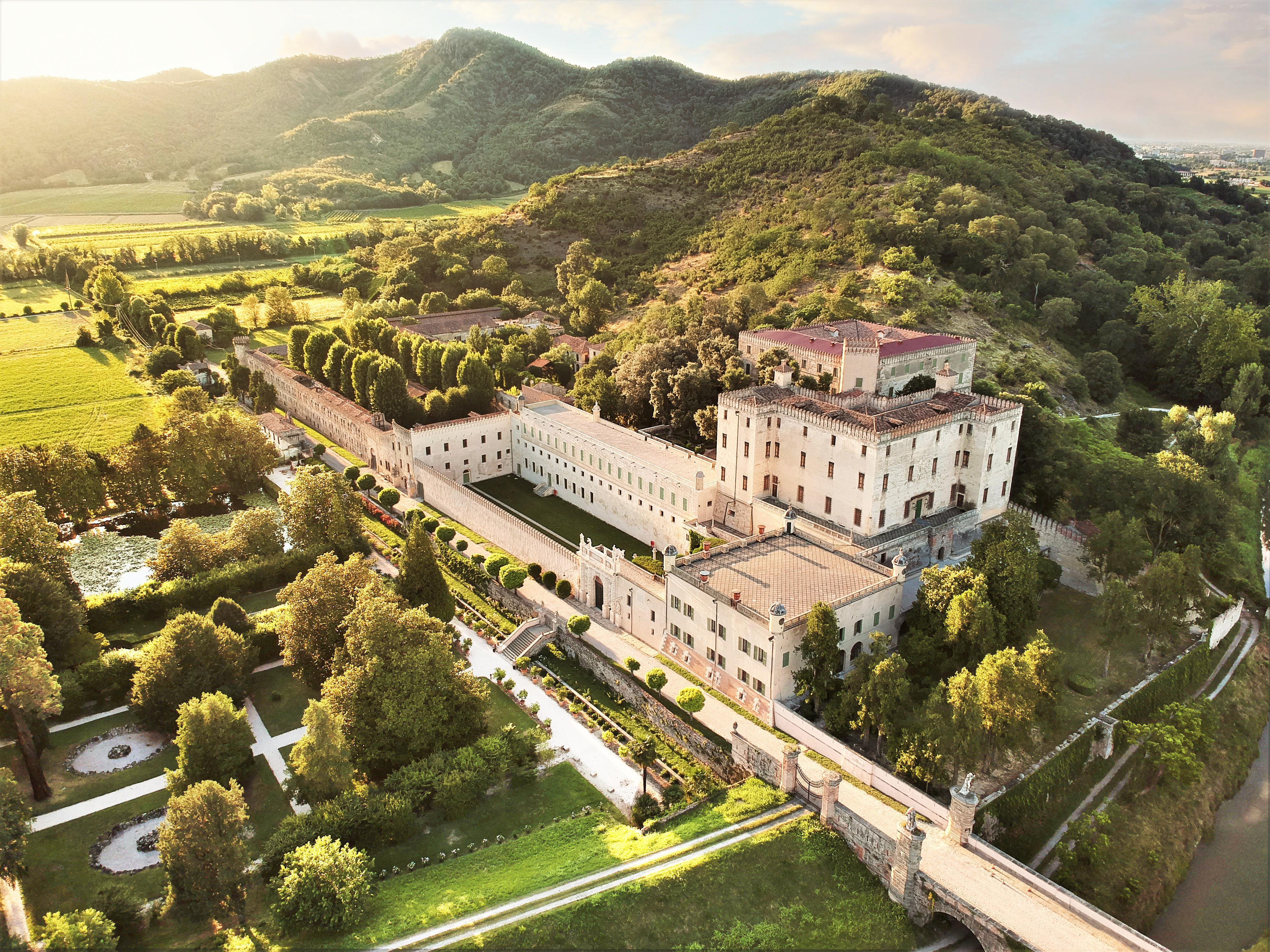
Castello del Catajo

Sottotitolo
16th-century mansion-fortress built on the foothills of Montenovo at the behest of Pio Enea degli Obizzi. The building, which includes 350 rooms, halls embellished with splendid frescoes painted by G.B. Zelotti, a beloved pupil of Paolo Veronese, corridors, stairways, large historic garden, and fountains, represents one of the most outstanding and complete patrician villas in the Veneto region and a prestigious venue for events and conferences.
Recapito telefonico
Recapito mail
info@castellodelcatajo.it
Coordinate geografiche
45.2967559, 11.7882656
Indirizzo
Via Catajo,1
Descrizione formattata
Palace-castle whose name is shrouded in many legends, seen from afar it can resemble Eastern fantasies, with its rhythm of terraces and unusual sculptures. Built in 1570 by Marquis Pio Enea degli Obizzi on a pre-existing hunting lodge. The Obizzi, captains of fortune originally from Burgundy, arrived in Italy following Emperor Henry II in 1007: they served Lucca, then Venice, for which Pio Enea fought, from whom we take the invention of the howitzer (= Obizzi). In the noble floor's halls, Giovan Battista Zelotti, a student of Veronese, frescoed in the second half of the 16th century the stories of the family, tracing its historical development in service to various cities and lords (room of Venice, of Lucca, of the pope, etc.), while Pio Enea II in the 17th century made Catajo an important artistic center, with the construction of a theater with sixteen boxes where his works were performed. It was home to important artistic collections (armory, archaeological gallery, library, numismatic cabinet, etc.), particularly enriched by Tommaso, the last marquis of the house who built the museum, a wing of the castle 73 meters long in which the archaeological collections were organized. Dying in the early 19th century, he left everything in inheritance to the last heir of the Este family and then to the Habsburgs, who had one of their summer castles here: they are responsible for the construction of the cubic building towards the mountain to accommodate the court.
External ID
bdb13948-3a96-4e6a-bd52-11542dc53073
Localita
Area turistica
CAP
35041
Immagine di copertina esterna
Orari di apertura

<p>From Tuesday to Friday 2:30 PM – 6:30 PM – Self-guided visits<br>Sunday 10:00 AM – 12:45 PM – GUIDED TOURS BY RESERVATION ONLY BOOK HERE<br>Sunday 1:00 PM – 6:30 PM – guided tours by reservation + self-guided<br><br>Thursday, October 5 closed for a private event<br>Extra opening: Saturday, October 28 2:30 PM – 6:30 PM<br><br>Note: Last access: 60 minutes before closing.<br>For more information on visiting hours and rates, scroll down.<br><br>Extra opening of the Imperial Chapel: Sunday, October 22. BOOK HERE<br><br>NOVEMBER 2023<br>Tuesday, Wednesday, Friday, Saturday 2:30 PM – 6:30 PM – Self-guided visits<br>Sunday 10:00 AM – 12:45 PM – GUIDED TOURS BY RESERVATION ONLY BOOK HERE<br>Sunday 1:00 PM – 6:30 PM – guided tours by reservation + self-guided<br><br>Note: Last access: 60 minutes before closing.<br>For more information on visiting hours and rates, scroll down.<br><br>Extra opening of the Imperial Chapel: Sunday, November 19. BOOK HERE<br><br>For GROUPS by reservation, it is possible to organize visits at different times, subject to availability. Check our "GROUP VISITS" section</p>

Informazioni importanti (nr. catalogo)

Catajo Castle - Catajo Castle, the royal residence of the Euganean Hills <br>Catalog Number IRVV (Regional Institute of Venetian Villas): A0500003649