Lugana D.O.C.
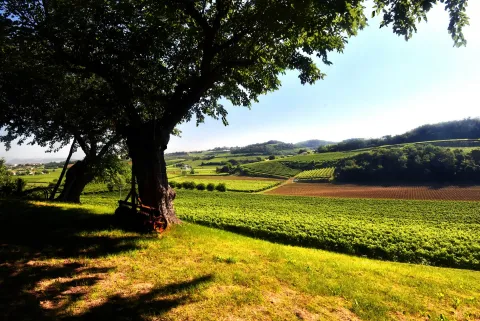
This wine represents the maximum expression of the Turbiana or Trebbiano di Lugana grapevine, perfectly acclimatized in the Garda Lake's microclimate. The Roman poet Gaius Valerius Catullus celebrated this wine in his poems while Longobard and Ostrogothic kings chose it for their tables.
The D.O.C. area includes a small, prized region near the southern shores of the lake, surrounding the municipality of Peschiera del Garda in the Verona area and the municipalities of Sirmione, Desenzano del Garda, Pozzolengo and Lonato in the Brescia area. The moraine hills characteristic to this zone, crossed by the river Mincio originating in Peschiera from the Garda lake, the predominantly clay soils with some traces of lime, rich in mineral salts, and the mild lake climate are all factors that contribute to defining the characteristics of the designation.
There are three different typologies of Lugana D.O.C.: Lugana, Lugana superiore and Lugana spumante.
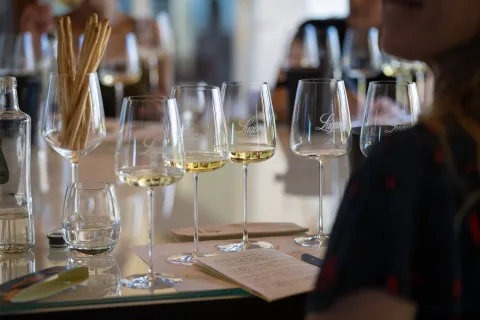
Lugana is straw yellow with hints of green, turning to gold with refinement. Its bouquet is delicate, pleasant, floral, and mineral fruity, its flavour fresh, soft and well-orchestrated. It becomes Lugana superiore after an ageing process of at least twelve months. This gives the wine its straw yellow or golden yellow colour, becoming more pronounced with refinement. Its bouquet is still delicate and pleasant, but it can also acquire features of tropical fruit or yellow flowers. Its palate is soft and harmonious, but more full-bodied with a subtle hint of wood.
Lugana spumante has a persistent, fine fizzyness, and is an intense straw yellow with possible gold reflections. It has a fragrant, subtly fruity aroma when the Charmat spumante method is used, while fermentation in bottle gives it an elegant, compact and aromatic bouquet when the classical sparkling process is used. Its flavour is fresh, tangy, stylish and well-orchestrated, with toasted, yeasty undertones. The area is full of very fascinating places in natural, artistic and historical terms. Peschiera del Garda, along the Verona shores of Lake Garda, was built at the mouth of the river Mincio, and between its powerful bastions built by the Austrians, traces of the battles that raged in the Risorgimento era can be seen, as can buildings by the architect Sanmicheli, the ruins of the Fortress belonging to the Della Scala family, ancient parish churches and the Sanctuary of the Madonna del Frassino.
Gambellara D.O.C.
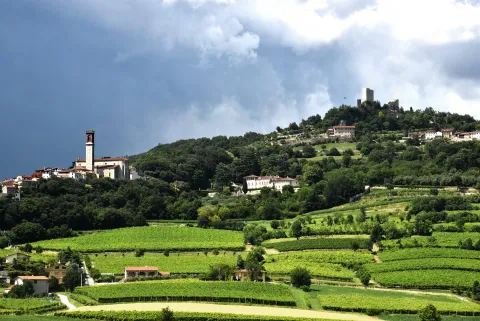
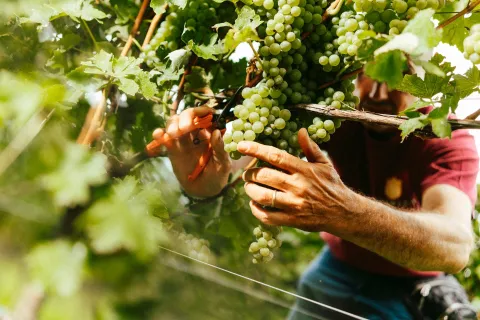
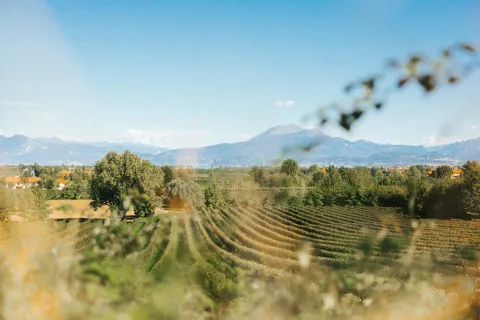
Gambellara is at the border between Vicenza and Verona at the mouth of the Chiampo valley, on the last spur of the Lessini mountains that look like soft waves at an altitude of between 250 and 350 meters, covered by vines and lush valleys crossed by several waterways. In geological terms, the area is of volcanic origin, with basaltic soils conforming more or less to the form of earthy and friable tuffs, which offer natural fertility particularly favourable to vine-growing, and a high mineral content that gives the wine its extraordinary accents. The area where vineyards are currently cultivated extends for about thousand hectares of predominantly hilly area, most of which are in the so-called ""classic"" region, the oldest area of provenance. The Gargànega grape variety is the luminary of the vineyards, grown almost exclusively in the western part of Veneto, which produces white, dry and passiti wines of outstanding quality.
Three types of D.O.C. wines are produced in the area: Gambellara, a dry, well-orchestrated white wine that bears the denomination of ""classico"" when it is from the oldest area of provenance; Gambellara Vin Santo and Gambellara Recioto, in the traditional and spumante versions. In particular, Recioto is the flagship of this D.O.C. designation, its uniqueness is linked to the special wine-making process used to make it. Once the grapes have been carefully selected from the vineyard, they are dried in bunches on the plateau or hung in the form of the typical ""picai"" in wellaired rooms. When the grapes have been drying for about a month and a half (between the end of November and the beginning of December), the grapes are once again selected and processed to obtain a first-pressing must that ferments until the following spring.
The result is an excellent wine, particularly suited to accompanying dessert. It is bright golden yellow in colour, with a heady, intense and fruity nose, it is amiably velvety, evenly bodied and has a typical slightly bitter, almond-like and aftertaste. Gambellara Vin Santo is another magnificent wine, only produced in the best vintages, and it can be stored in the winery for 50 years without deteriorating. It is made by a process very similar to traditional Recioto, but provides a longer drying period and therefore the grapes are pressed the following year. It makes less wine but its alcohol content is higher. Very high production costs along with extremely limited supply make this one of the rarest jewels in the wine industry.
All the twenty wineries in the area are included on the itinerary of the Strada del Vino (Wine Road), that spans the four municipalities of the D.O.C. area: Gambellara, Montebello Vicentino, Montorso Vicentino and Zermeghedo. The area could be defined as a ""wine park"" for its attractive landscape and deep-rooted cultivation specialisations.
Piave D.O.C.
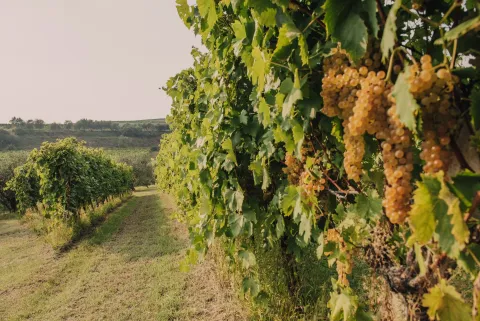
The area located between the provinces of Venice and Treviso in the basin of the Piave river is full of vine cultivations, growing happily in the clay soil that is rich in mineral salts and well fertilised. Local soil conditions lend themselves to top quality, prized red wines.
This area extends through a broad plain bordered by the sea to the south, the hills of Conegliano and Montello to the northwest, and Friuli to the northeast, and is crossed by the Piave river. An anonymous writer in the late sixteenth century described this area ...« The Piave river is very convenient and useful to Venice, [...] this river can be navigated by boats from Ponte di Piave to Venice, bearing wheat, wine and other goods ».
""Burci"", large, slowboats that could navigate the channels, every day carried all sorts of goods, such as clothes scented with lye and bread to the ""fónteghi""(storehouses) of the Serenissima Republic of Venice, making for rather hectic comings and goings along the waterway. The hinterland of Venice and the area around the town of Oderzo had been home to the stores of the Serenissima Republic of Venice since its origins, and this practical and economic relationship resulted in the ""Veneto villas"" being built. These were not merely for the enjoyment of the Venetian nobility but - and especially from the mid sixteenth century - they were used in an attempt to improve agriculture and make the land thrive. Therefore, it was not by chance that the people of the Piave river have for centuries been cultivating grapes for the ""vineyards of Dogi"", today producing a dozen or so wines of importance.
The D.O.C. white wines are: Piave Chardonnay, Piave Pinot bianco, Piave Pinot grigio, Piave Verduzzo and Piave Tai. The D.O.C. red wines are: Piave Cabernet, Piave Cabernet Sauvignon and Piave Merlot (all also as riserva), Piave Pinot nero and Piave Raboso. The latter, made by native Raboso grapevine, is ready for market after only three years of ageing, one of which in the barrel.
The territory has plenty of history and is linked by the Strada del Vino (Wine Road) extending for over 150 kilometres. Visitors are thus able to discover the different economic and cultural centres of importance, such as Roncade, Oderzo -the Roman Opitergium that was rebuilt many times - and Motta di Livenza. But what is certain to touch the tourist the most is the atmosphere on the left banks of the Piave, in the Raboso district, with its ancient traditions and its alleyways that tease the visitor with glimpses of the river, remote churches hiding precious frescos and the fine town of Portobuffolè.
Garda D.O.C.
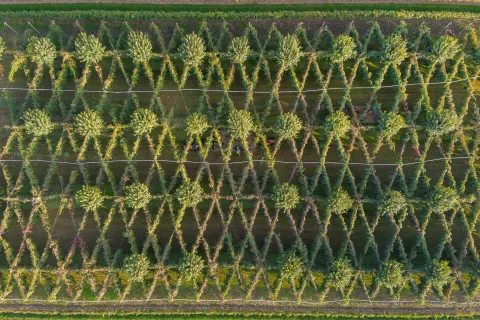
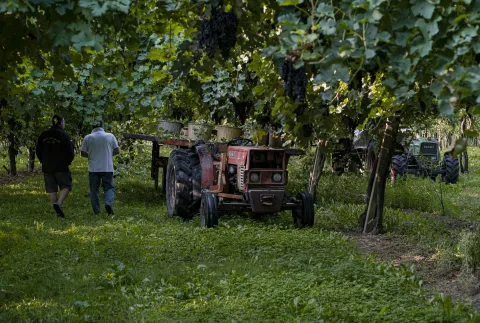
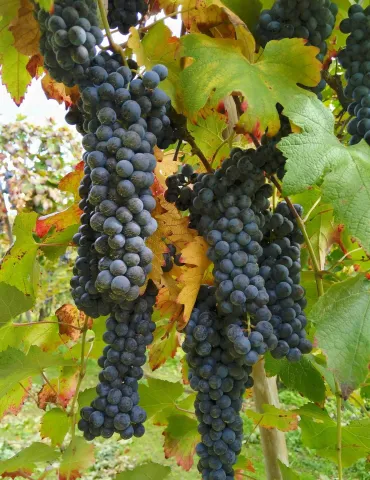
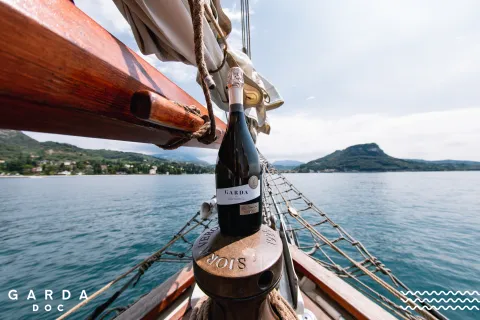
The area of provenance includes the parts of the provinces of Verona and Brescia that overlook Garda Lake, and part of the province of Mantua.
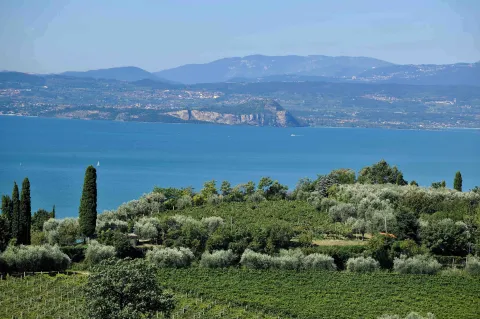
Vine-growing in these areas dates back to the times of the Etruscans who imported wine-making techniques. The special qualities of Garda Lake, especially its moraine soil and the mild climate, have encouraged vine cultivation to the point it has become very important for the local economy, thanks also to the excellent results obtained by wine-growers who have always pursued the search of quality in their work. Vineyards alternate with olive trees and cover the hills of the Garda area with their colours that change with the seasons.
The designation was awarded very recently (2005) to qualify some wines produced from a single vine species, traditionally grown in areas with consolidated designations of origin only for wines produced as mixed varieties. The D.O.C. wines, made with at least 85% of their grape content from the species of vine that give them their names, are: Garda Chardonnay, Garda Cortese, Garda Garganega, Garda Pinot bianco, Garda Pinot grigio, Garda Riesling, Garda Riesling italico, Garda Sauvignon, Garda Tai, Garda spumante rosé, Garda Barbera, Garda Corvina, Garda Cabernet, Garda Cabernet franc, Garda Cabernet Sauvignon, Garda Merlot, Garda Pinot nero and Garda Marzemino.
Wines from the grapes of official Garda Garganega an Garda Chardonnay species of vine can be rendered sparkling thanks to a natural re-fermentation process, and are subsequently put on the market as simply Garda frizzante. Those obtained from the Pinot Bianco, Chardonnay and Riesling grapevines can be made into a spumante, again, only following a natural re-fermentation process. It should be noted that Corvina and Cortese are grapes from native species of vine that are very important for the celebrated blends in the area: Corvina for red wines such as Amarone, Valpollicella and Bardolino; Cortese for white wines such as Bianco di Custoza.

Merlara D.O.C.
This designation, awarded in 2000, can be attributed to dedication of local wine-growers who have recently moved closer to quality wine-growing techniques.
The area of provenance, which encompasses some municipalities in the province of Padua and others in the province of Verona, has always been interested in wine-growing, even if only as a marginal and secondary cultivation, dating back as far as the 16th century. The grapes, harvested and processed in the wineries of the courts to make the wine, were served as refreshments to the numerous wayfarers as they went on their way through the old roadways connecting important trading towns.
The area has recently turned to better quality wine-making, thanks to the commitment of local growers who have invested not only in more technically advanced business management, but also in vineyards. Local historical ties with vines can be traced to varieties such as Marzemino, Raboso and Merlot as far as red wines are concerned and Malvasia and other grapes such as Trebbiani for whites.
D.O.C. wines are: Merlara Bianco - a blend comprising 50-70% of Tocai friulano and the remainder of other white grapes -, Merlara Bianco frizzante (sparkling), Merlara Tai, Merlara Malvasia, Merlara Rosso - a Merlot, Cabernet and Marzemino blend -, Merlara Cabernet, Merlara Cabernet Sauvignon, Merlara Merlot, Merlara Marzemino frizzante (sparkling) and Merlara novello.
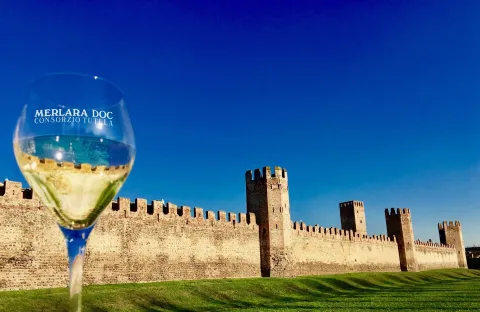
The territory is home to a number of places of interest, such as the historical town walls of Montagnana, Villa Correr in Casale di Scodosia, Villa Barbarigo in Merlara and Villa Fascinato in Terrazzo.
The beauty of the landscape the area has to offer is appreciable. Each season characterises and changes the landscapes of valleys against the backdrop of the Euganean and Berici Hills, a unique view. In spring, the orchards blossom and the emerald green of the vines provides a charming view of the landscape. In summer, the golden expanses of wheat fields are a wonderful sight glimpsed between the Adige and Fratta rivers.
In autumn, the colour of leaves in the vineyards, exposed to the sun, reflect golden and reddish shades all around.
Prosecco D.O.C.
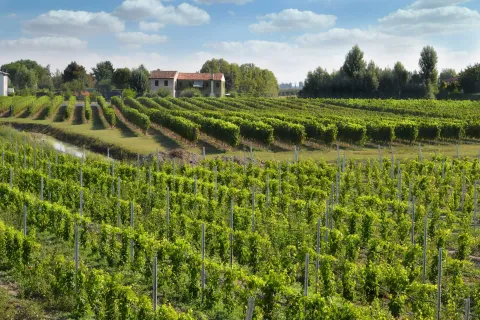
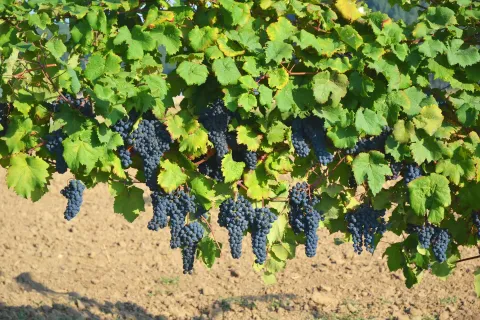
The production area of Prosecco DOC has been regulated with the 2009 production conditions regulation and covers the provinces of Belluno, Padua, Treviso, Venice and Vicenza. Mainly obtained from the traditional Glera grape, it may also use a maximum of 15% of other varieties such as Verdiso, Bianchetta trevigiana, Perera, Glera lunga, Chardonnay, Pinot bianco, Pinot grigio and Pinot nero vinified as a white wine. The three final versions of Prosecco commonly found are still, spumante (gently sparkling) and frizzante (fizzy).
The regulation formalised the traditional cultivation already in use with single and double espalier-trained vine spacing and a minimum number of 2,300 vine stocks per hectare. Expansive planting in pergola or ray formation and any forced practice is expressly forbidden. As for other DOC wines, the maximum yield permitted is 18 tonnes of grapes per hectare of specialised vineyard with a minimum natural alcohol per volume value of 9.50% vol. for still wine and 9% vol. for spumante and frizzante.
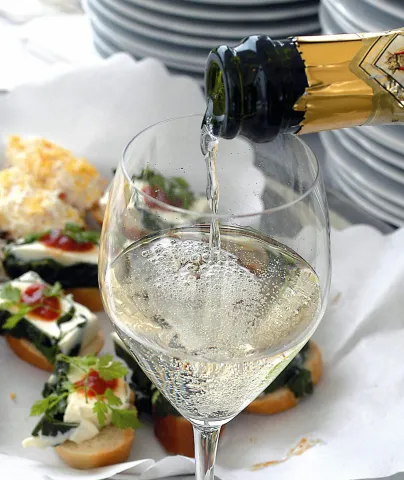
Available in the variations brut, extra dry, dry and demisec, the Prosecco spumante is exclusively obtained through natural autoclave fermentation, while frizzante can also be fermented in the bottle. The rigorous procedures ensures the quality of the product of traditional wine that achieved worldwide prestige for Veneto and Italy, appreciated just as much and even more than other more acclaimed wines.
Lison - Pramaggiore D.O.C.
The area of provenance is located in the eastern extremity of the province of Venice and in a limited area of the nearby provinces of Treviso and Pordenone. Its flat, alluvial lands have been formed over millennia, made fertile by the humus carried by flooding from the many streams flowing down from the Alps.
The location's distance between mountains and sea in addition to its abundant waterways has attracted numerous civilisations to settle through the ages: from the paleo-venetian civilisation to the Romans, through to the Barbarian invasions that contributed, by contrast, to the founding of Venice and the extraordinary progress it stimulated throughout the region, thanks in part to the work of the Benedictine monks and the construction of Benedictine abbeys, of which Sesto al Réghena and Summaga are two magnificent examples that still stand today.
The need to trade with these civilisations for goods, especially food and wine, led to a series of navigable channels being built in the hinterland to the great amazement of the world in the year 520. Cassiodorus, Governor for King Theodoric, invited the Venetian tribunes to the transport of goods in a speech ... «this thing [...] will not require much effort from those who often sail the seas, from you who are born seamen and have to cross the seawaters in your place of birth to go from one place to another; if a storm should prevent you from sailing in open seas, another way will open up safely [...] I mean rivers where your boats, protected against and safe from winds and weather, cut into the land that looks just like a plain». It is, therefore, no wonder that the wine-growing and wine-making culture dates back centuries, having now become part of tradition through the special, constant care and attention that has made the Lison-Pramaggiore wine-making area one of the first most important and advanced in Italy, and its wines famous worldwide.
The D.O.C. wines are: Lison-Pramaggiore Bianco, Lison-Pramaggiore Tai or Lison-Pramaggiore Lison, Lison-Pramaggiore classico Tai or Lison-Pramaggiore classico Lison, Lison-Pramaggiore Chardonnay (also sparkling and spumante), Lison-Pramaggiore Pinot bianco (also sparklingand spumante), Lison-Pramaggiore Pinot grigio (also spumante), Lison-Pramaggiore Riesling (also spumante), Lison-Pramaggiore Riesling italico, Lison-Pramaggiore Sauvignon,Lison-Pramaggiore Verduzzo (also sparkling), Lison-Pramaggiore Verduzzo dolce, Lison-Pramaggiore Merlot rosato (rosé), Lison-Pramaggiore Rosso (also riserva), Lison-Pramaggiore Cabernet (also riserva), Lison-Pramaggiore Cabernet franc (also riserva), Lison-Pramaggiore Cabernet Sauvignon (also riserva), Lison-Pramaggiore Merlot (also riserva), Lison-Pramaggiore Malbech, Lison-Pramaggiore novello and Lison-Pramaggiore Refosco dal peduncolo rosso.
Since 1986, the district has included the Strada del Vino (Wine Road), offering visitors the opportunity to discover a region bursting with vistas and history. Its guide symbol is the Lion of Saint Mark, used to denote recommended wine-growers and wineries for the benefit of visitors, but also shops, hotels and restaurants offering typical foods, and cultural and natural attractions.
VISIT THE WEBSITE
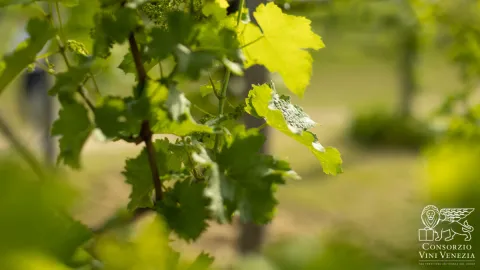
Monti Lessini D.O.C.
The area of provenance is completely hilly and extends through the provinces of Verona and Vicenza. On the side nearer Verona, the territory includes the upper Val d'Illasi, Valle del Tramigna and the towns located to the north of Val d'Alpone, whilst on the Vicenza side lie the valleys of the Chiampo, Leogra and Agno rivers.
The soils are mainly of volcanic origin, composed of basaltic tuff. But it is not the soil or climate conditions that matter most in this D.O.C. area, but rather the features of the native grapevine, the Durella. Its special quality is a very high natural acidity in the grapes deriving from the plant as opposed to the soil which is mainly alkaline. More precisely, it is the combination of the soil and the plant that gives the grape its unique flavour.
It is also called ""Juliet's Wine"". Shakespeare drew inspiration for his famous tragedy from a story written by Luigi da Porto, an aristocratic from Vicenza who, in 1530, wrote about the two noble lovers, Romeo and Juliet. In his work he mentioned the ""Duràsena"" grapes growing in the valleys surrounding the two castles of Montecchio Maggiore where the wine drank by the unlucky lovers was made. The Duràsena of that time is today's Durella variety, which is used to make still or spumante Monti Lessini Durello. Production also includes Monti Lessini Durello superiore and Monti Lessini Durello passito, the latter obtained from the careful selection of grapes which are left to age for at least four months. The acid undertone of Durella is reduced by the high concentration of sugar in this wine which assumes unmistakable accents.
Other D.O.C. wines are: Monti Lessini Bianco, Monti Lessini Bianco superiore, Monti Lessini spumante, Monti Lessini spumante rosato or rosé, Monti Lessini Rosso and Monti Lessini Rosso riserva.
The enchanting valleys of Lessinia offer the perfect itinerary for the Strada del Vino (Wine Road), where visitors can discover the region that has historically been home to and still is home to this extraordinary grapevine. The Road links towns with great wine-making traditions, offering architectural and panoramic points of interest along the way, including one of the most famous fossil sites known to the world, Bolca.
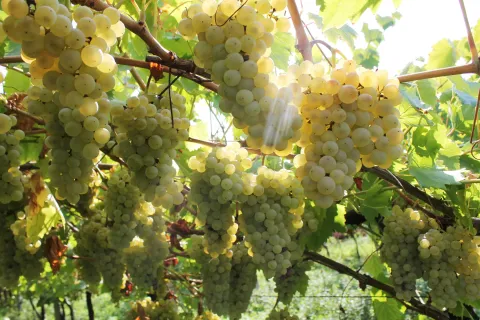
Montello e Colli Asolani D.O.C.
The area of provenance includes, in the province of Treviso, the foothills on the right bank of the Piave river, rising up from Montello to the slopes of the Grappa peaks. These two area bore witness to events towards the end of World War I, commemorated by two chapels that remain open to the public.
The area is, however, more typically associated with culture than the war. At the foot of the Grappa Mountain, Valcavasia is home to Possagno, the birthplace of Antonio Canova who was buried here in a Temple that he himself designed. The house where he was born and the famous Gipsoteca gallery of plaster casts, which hosts a number of reproductions of his work, are open to visitors.
To the south is Montello, an oak wood dating to the era of the Serenissima Republic of Venice, that has inspired writers and poets through the ages: from Monsignor Della Casa who was inspired in the mid seventeenth century to write his renowned ""Galateo of Manners"", to the recent poems by Andrea Zanzotto.
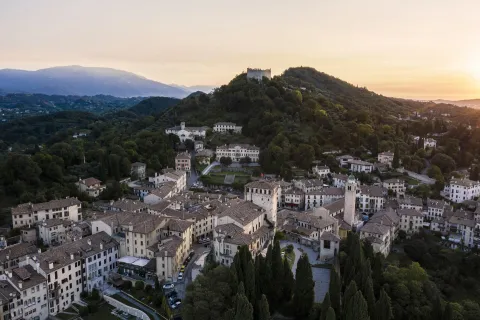
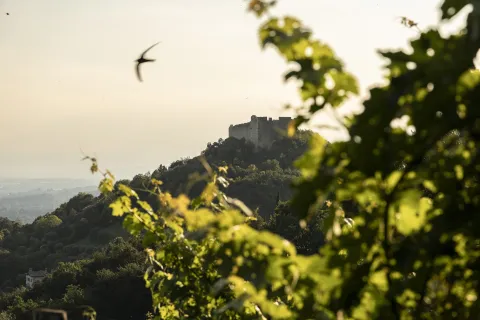
The Asolo hills lie between the mountains and the river, and cradle the town dominated by the Medieval fortress and which is scored by alleyways, palaces and porticos housing works of great historical, artistic and cultural value, muchloved by intellectuals around the world.
Main attractions such as the winged lion of Saint Mark towering above the sixteenth-century fountain can be seen in the square, which also provides access to the Castle, once the home of Caterina Cornaro, Queen of Cyprus, to the Palazzo della Ragione and the Cathedral. Dante mentioned these delightful lands in the Divine Comedy and Giorgione painted them in the sixteenth century.
D.O.C. white wines are: Montello e Colli Asolani Chardonnay, Montello e Colli Asolani Pinot bianco, Montello e Colli Asolani Pinot grigio (also as spumante),Montello e Colli Asolani Prosecco (also as sparkling and spumante).
D.O.C. red wines are: Montello e Colli Asolani Rosso, Montello e Colli Asolani Cabernet, Montello e Colli Asolani Cabernet franc, Montello e Colli Asolani Cabernet Sauvignon and Montello e Colli Asolani Merlot (all also as superiore).
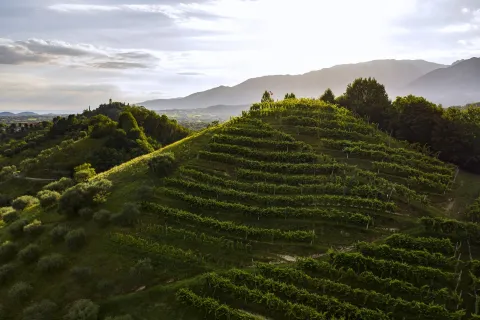
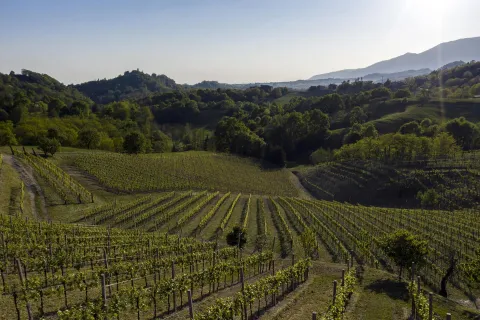
This territory is marked by gently rolling hills and plains that run from the river to the mountain with rows of vineyards that alternate with coppice woods. Here important villas designed by Palladio such as the famous Villa Barbaro in Maser can be seen and typical local products are available to try. The area's features prompted the realization of the Strada del Vino (Wine Road), the most recent of those recognised by the Veneto Region.
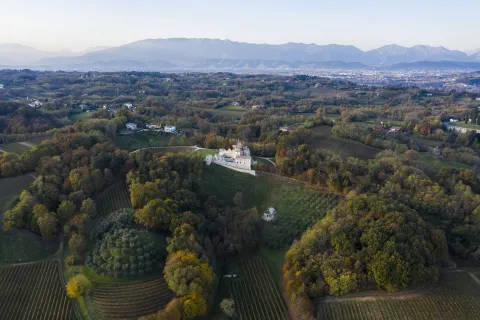
Colli Berici D.O.C.
The Berici Hills could be considered the green heart in the Veneto Region, a rural area of extraordinary beauty where nature always has a surprise to offer in its landscapes and unspoilt, little-known spots.
The area of provenance is in the heart of the Veneto plain, to the south of Vicenza. In these limestone hills, wine-growing dates back to man's earliest settlements in this area, where the climate even favours the cultivation of olive groves. Besides soil and climatic conditions, the quality of the wine from the Berici Hills also derives from the passion of generations of wine-growers who have already established the Protection Consortium in 1982.
The grapevine typical of this area is Tocai rosso which, grown in the oldest documented areas dotted among the Barbarano Vicentino hills, makes Colli Berici Barbarano. This is a very special ruby red wine, with a vibrant fragrance, and fruity, dry, floral and well-orchestrated flavour.
The other D.O.C. wines are: Colli Berici Chardonnay, Colli Berici Garganega, Colli Berici Pinot bianco, Colli Berici Sauvignon, Colli Berici Tai, Colli Berici spumante, Colli Berici Tai rosso, Colli Berici Cabernet, Colli Berici Cabernet riserva and Colli Berici Merlot.
In the Berici Hills, the Strada del Vino (Wine Road) follows a charming itinerary along vineyards and cultivations following the line where plain and hills meet. Several villas, villages, retreats and convents stand testimony to the lure the area has had throughout the ages. Còvoli, prehistoric natural caves, and fortified castles dating to tenth and eleventh centuries are treasures bearing witness to show how long the work of man has configured these charming hills during the past ages.
The Strada del Vino (Wine Road) begins in Vicenza, at the old Arch standing at the foot of the ""Scalette"", the stairs leading the faithful to the Sanctuary of Monte Berico. It then passes along a section that skirts the most famous villa by Palladio, ""La Rotonda"". From here, it follows the contour of the Colli until linking all the towns built at the bottom of the hills, the great historical and wine and food heritage of the Road. The itinerary continues on to the outskirts of Verona and the Chiampo valley, finally ending in Vicenza.