Corti Benedettine del Padovano D.O.C.
The area of provenance, awarded the D.O.C designation in 2004, extends to southeast of the province of Padua and the south of the province of Venice. The designation does not, however, define a specific geographical area as much as marks an important historical period in terms of the social and economic development of this part of the Veneto plain.
Wine-growing and wine-making go back, indeed, a very long way, its origins dating back to the days of Antenor who, according to a legend, is the mythical Trojan hero who founded the city of Padua and first cultivated a magic plant, that he had jealously brought back from the ancient lands of Asia.
The earliest existing evidence dates to ancient Roman times. The wide diffusion of this type of cultivation in the area, however, is specifically attributed to the Benedictine Courts which became the administrative, economic and social centre of large estates for almost thousand years, and to the monks who lived there and who contributed to developing the area by preparing land for cultivation, embanking the rivers, constructing rural buildings and working the land. Wine produced in the generous cellars of the Courts became a major commodity to exchange with the towns of Padua and Venice, and especially the latter enjoyed trade with all Mediterranean ports. Centuries of experience has set the vineyards and wineries in good stead in this part of Veneto where, together with the historical and native grapevines, such as Raboso, Refosco, Tocai and Moscato giallo, wine-growers also produce socalled international wines that thrive in the excellent local climate and soil conditions: Merlot, Cabernet, Cabernet Sauvignon, Chardonnay, Sauvignon, Pinot grigio and Pinot bianco. These wines are to be enjoyed young, appreciated for their fresh taste accompanied by intense floral notes, whilst others require medium or long periods of ageing, underscoring their bouquet and offering the palate greater complexity and an elegant structure, along with superior contours.
Visitors to the area have the chance to see medieval monasteries and courts, some of which are today used as villas or residences. Piove di Sacco offers the beauty of the Monastery of Saints Vitus and Modestus, which was already existing in 1100, while Legnaro and Correzzola each have an important Benedictine Court. In Bagnoli, Villa Widmann still shows the ancient structure of the monastery built after the city was donated to Benedictine monks in 954.

Breganze D.O.C.
Proof of this vine has been found in the area dating back time immemorial. References to growing vines are present in many contracts of sale dating back to the period between 1300 and 1600, and evidence suggests that Breganze has been renowned for its quality wines since the eighteenth century.
The area of provenance, which obtained the D.O.C. designation in 1969, includes some municipalities in the province of Vicenza, delineated by the Astico and Brenta rivers, in the area where the hills meet the plains and where vines produce a high quality fruit.
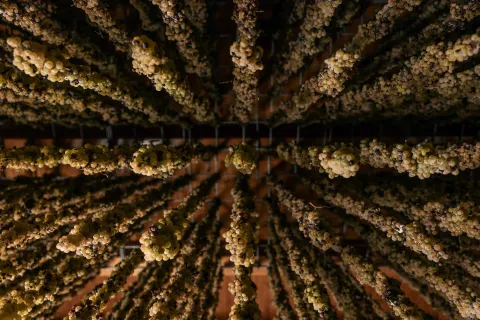
The wine-growing and wine-making tradition in the area has typically focussed on native grapevines, especially Vespaiolo, used to make Breganze Vespaiolo and Breganze Vespaiolo superiore and, once the grapes have been carefully selected and dried, Breganze Torcolato.
In addition, imported grapevines find this the perfect climate, allowing for success with pure and mixed varieties,
such as Breganze Bianco, Breganze Bianco superiore, Breganze Rosso and Breganze Rosso superiore.
The other D.O.C. wines are: Breganze Chardonnay, Breganze Chardonnay superiore, Breganze Pinot bianco, Breganze Pinot bianco superiore, Breganze Pinot grigio, Breganze Pinot grigio superiore, Breganze Sauvignon, Breganze Sauvignon superiore, Breganze Cabernet, Breganze Cabernet superiore, Breganze Cabernet Sauvignon, Breganze Cabernet Sauvignon superiore, Breganze Pinot nero, Breganze Pinot nero superiore, Breganze Marzemino and Breganze Marzemino superiore.
"Riserva" identifies Rosso, Cabernet, Cabernet Sauvignon, Pinot Nero, Marzemino and Torcolato that are put on the market after an ageing period of at least two years.
The Strada del Vino (Wine Road) itinerary winds through the foothills of Vicenza between the valleys carved by the Astico and Brenta rivers. The tour begins in the town of Thiene, which plays an increasingly important role in Vicenza's economy and social framework. Moving eastward, it leads to Lonedo di Lugo, in the municipality of Lugo di Vicenza, where Villa Godi Malinverni and Villa Piovene are considered charming examples of Palladio's architectural works in Veneto. The tour continues a few kilometres further to Breganze, before dipping towards the plain, passing over the Bastia di Montecchio Precalcino, located on a lonely hill, skirting the banks of the Astico river and the town of Sandrigo, the birthplace of the traditional dish called baccalà alla vicentina. Mason Vicentino is as famous for its cherries as Marostica, a Medieval town whose city walls surround the Piazza degli Scacchi and connect the Higher Castle to its lower counterpart. The tour culminates in Bassano del Grappa, one of the oldest and most beautiful provincial towns in Italy.


Bardolino D.O.C.
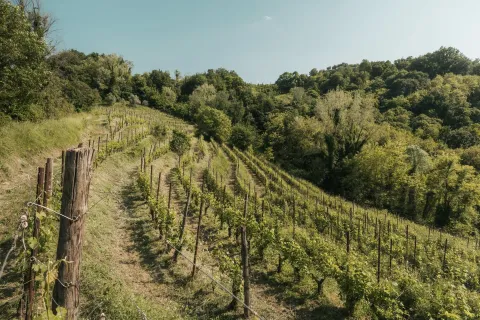
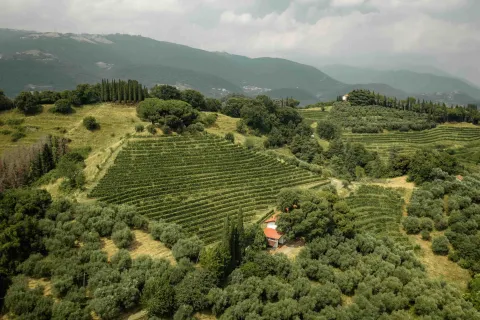
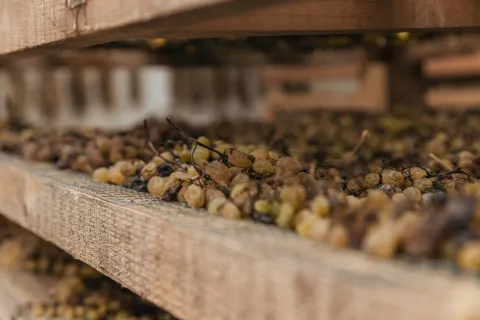
Seeds found in lakeside dwellings in Cavaion Veronese, Lazise and Bardolino suggest that vines have been grown in this area since the Bronze Age. In particular, the designation takes its name from the homonym town located on the lush green eastern shores of the Garda Lake. Certainly, the name Bardolino is German in origin, but legend also suggests it derives from Bardali, daughter of King Axuleto and niece of Manto, founder of Mantua, celebrated by the Latin poet Virgil and by Dante in the Divine Comedy. Monks from the Church of Saint Columban took care of producing Bardolino in the Medieval period, thereby saving it from obscurity. Until the nineteenth century, Bardolino was usually made by fermenting must in impermeable cavities in the earth, covered with slabs of stone. Currently, the traditional wine-growing and wine-making processes are combined with advanced technology for the purpose of maintaining the features of the grapes that grow and ripen in the singular environment of a lake interland.
The first Protection Consortium of Bardolino wine was established in 1924, in response to a perceived need to supervise and protect the production of this wine whose fame was growing in line with rising trade. A study conducted in 1939 by the Agricultural Institute of Conegliano Veneto led to the definition of the best production areas. At that time, the moraine area that stretches the length of Lake Garda's east coast was identified as the ""Bardolino"" area (encompassing the municipalities of Garda, Costermano, Affi, Bardolino, Cavaion and Lazise), a separate entity from the ""Sona-Custoza"" area (including the municipalities of Sona, Sommacampagna and Valeggio) using criteria based on soil type and climate conditions, marking the origins of current zoning studies.
A mild climate, sun exposure, a balance of rain and temperature, soil variety including sand, gravel and clay, in addition to the dedication and skill of wine-makers, have made Bardolino a particularly palatable wine that has won international acclaim.
The D.O.C. wines are: Bardolino, Bardolino classico, Bardolino Chiaretto, Bardolino classico Chiaretto, Bardolino Chiaretto spumante, Bardolino novello and Bardolino classico novello.
These wines are made with precise grape mixtures made from the fruit of species of vine native to Verona such as Corvina, Rondinella, Molinara and Rossignola. The seventy kilometres of the Strada del Vino (Wine Road) itinerary link 16 different municipalities along the shore and inland: in this route numerous wineries welcome visitors in the shadows of old churches, Medieval castles and the villas of nobility encircled by wonderful gardens.
Bagnoli o Bagnoli di Sopra D.O.C.
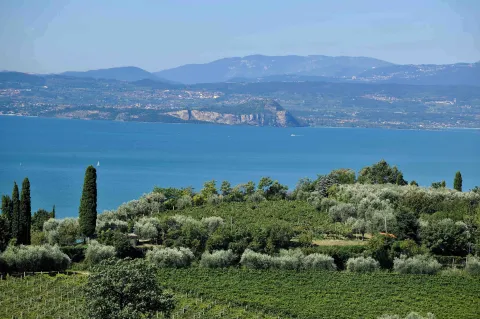
For more than a thousand years, the hystory of this region, covering a delimitated area in the south of the province of Padua, has been associated with the tradition of vines, grapes and wine. The Benedictine monks had their seat in Bagnoli di Sopra from 964 and their work can be credited with extending the practice of wine-growing and defining its importance. This is why only the wine made in the municipality of Bagnoli di Sopra, the original and oldest D.O.C. area of provenance and a place where research activity continues, can be called ""classico"".
Grapevines cultivated in this production area grow on alluvial and sedimentary, mixed and lime soil. It is this soil which, together with the wide temperature range in summer attributable to the nearby Adige river, determines the strong aroma of the local grapes.
The D.O.C wines are: Bagnoli Bianco, Bagnoli classico, Bagnoli spumante, Bagnoli rosato (rosé), Bagnoli classico rosato (rosé), Bagnoli spumante rosato (rosé), Bagnoli Rosso, Bagnoli classico Rosso, Bagnoli Rosso riserva, Bagnoli classico Rosso riserva, Bagnoli Cabernet, Bagnoli classico Cabernet, Bagnoli Cabernet riserva, Bagnoli classico Cabernet riserva, Bagnoli Merlot, Bagnoli classico Merlot, Bagnoli Merlot riserva, Bagnoli classico Merlot riserva, Bagnoli Friularo, Bagnoli classico Friularo, Bagnoli Friularo riserva, Bagnoli classico Friularo riserva, Bagnoli Friularo vendemmia tardiva (late-harvest), Bagnoli classico Friularo vendemmia tardiva (late-harvest), Bagnoli passito and Bagnoli classico passito.
The grape is also suitable for late harvest after Saint Martin's day (11th November), and dried. In honour of this wine, in existence as far back In particular, Friularo is a red wine produced from native vines of the same name belonging to the Raboso family. as the days of the Serenissima Republic of Venice, the road linking Padua to Bagnoli, through Conselve, was called Stradon del Vin Friularo.
This Road has been rediscovered and enhanced in recent years, and is now an idyllic route for nature lovers winding through the tranquil, green countryside. Visitors to the area can admire works by great masters like Tintoretto in Conselve, Tiepolo in Cartura, Bonazza in Bagnoli and in Candiana to name but a few; villas of the aristocracy, such as Villa Widmann designed by Baldassarre Longhena and Villa Garzoni by Jacopo Sansovino; churches and monasteries, castles and old ""casoni"" (humble thatched cottages). Lastly, the Benedictine Courts are admired for their architectural uniqueness and beauty, as well as their great contribution to local grape-growing over the span of centuries.
Arcole D.O.C.
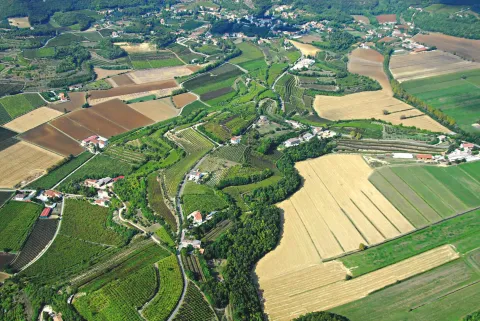
The wine's provenance was defined by official guidelines in 2000. It covers a strip of land extending around 300 square km located on the alluvial plane between the provinces of Verona and Vicenza, while the hilly area is in the south, with Motta Hill in San Bonifacio, and in the east, covered by part of the Berici Hills.
This large area has mainly sandy or sandy-clayey soil reclaimed over the centuries, canalizing the water of the various rivers, Adige in particular, which flow through the region.
The vineyards that first appeared to the all East of Verona are attributed to the Romans. The area has become especially famous for the cultivation of a particular kind of vine, the vite retica. Monks from the Villanova Abbey cultivated vines, making it the main wine-growing area around the year 1000.
A document dated 1562 demonstrates that the monastery counted «150 vine fields in its possession [...] and [...] there were other fields in Arcole, 579 fields in all ».
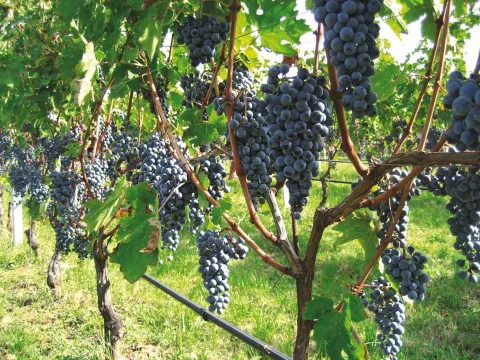
Wine-growing today draws on modern techniques combined with tradition and the dedication of its wine-growers.
The wines bearing the D.O.C. designation are: Arcole Bianco, Arcole frizzante (sparkling), Arcole spumante, Arcole Chardonnay, Arcole Chardonnay frizzante (sparkling), Arcole Garganega, Arcole Pinot bianco, Arcole Pinot grigio, Arcole Sauvignon, Arcole rosato (rosé), Arcole rosato frizzante (rosé sparkling), Arcole Rosso, Arcole Rosso frizzante (sparkling), Arcole novello, Arcole Nero, Arcole Cabernet, Arcole Cabernet riserva, Arcole Cabernet Sauvignon, Arcole Cabernet Sauvignon riserva, Arcole Carmenére, Arcole Carmenére riserva, Arcole Merlot, Arcole Merlot riserva, Arcole passito and Arcole Garganega vendemmia tardiva (late-harvest).
The traditions of wine-growing and wine-making are deeprooted in the territory. Agricultural seasons are still defined by the stages of vine-growing and the work the cultivation entails. Home wineries are still scattered among the vineyards where the genuine flavour of tradition can still be savoured.
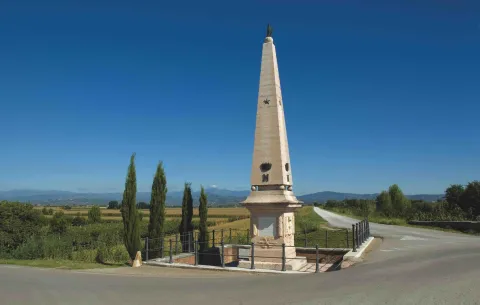
Along the first stretch of Porcilana road, an ancient Roman road connecting Este to San Martino Buon Albergo, some road signs reveal the area's Napoleonic origins. The Monastery of San Giuliano di Lepia - a marvellous but little known Medieval jewel - is located at the beginning of this road. A little further on is the town of Gombion where, during the battle of Arcole (15-17 November, 1796) the French military forces led by Napoleon clashed with Austrian forces. An obelisk - the only one in Italy celebrating a Napoleonic battle - stands as a reminder of the French victory in Arcole. More over, along the Strada del Vino (Wine Road) itinerary visitors will come across numerous points of beauty including churches and monuments in this quality wine territory.
Bianco di Custoza o Custoza D.O.C.
A perfect balance of knowledge and vine-growing tradition, climate and soil conditions unique to the area between the south shore of the Garda Lake near Verona, the Mincio and the Adige rivers have each contributed to this wine. In the designated area of provenance, soils are mainly moraine containing the well-polished stones typical of glacial deposits, the climate is mild, and rainfall average. The grapes are cultivated in sunny vineyards, with ample exposure giving the product a distinct quality.
D.O.C. wines are: Bianco di Custoza, Bianco di Custoza superiore, Bianco di Custoza spumante and Bianco di Custoza passito. The official guidelines provides for the use of Trebbiano toscano, Garganega, Tocai friulano, Bianca Fernanda (a local Cortese cross), Malvasia, Riesling italico, Pinot bianco and Chardonnay grapevines in strict proportions. Bianco di Custoza D.O.C. is a white wine. Its straw yellow colour tends towards golden yellow with ageing. It has a fruity and slightly aromatic fragrance and velvety flavour.
The Strada del Vino (Wine Road) itinerary winds through the inland landscapes around the Garda Lake, through vineyards and olive groves, villas and castles, the area's ancient atmosphere enchanting the visitor.
Walkers can enjoy historical and natural trails (named ""Camminacustoza"" and ""Tamburino Sardo"") among the Custoza hills and cyclists can choose from several itineraries, from Castelnuovo towards the Garda Lake, over the Valeggio hills, from Sandrà along the Popes road to Oliosi, through the Tione valley and over Mount Mamaor, the last peak to the south of the hills carved millennia ago by glaciers.
During the itinerary it is particulary attractive visit the town that gives the name to this famous wine, Custoza, a charming old place which was once a sentry and detention outpost overlooking the Postumia road. The area abounds with reminders of the Risorgimento. Two battles in the period of dissension leading to unification were fought here, leaving traces scattered among the vineyards, such as the Ossuary, the Sardinian drummer farm and a monument celebrating the grenadiers of the Sardinian Brigade.
Colli Euganei D.O.C.
The Euganean Hills are of volcanic origin, their typical cone shapes rising like oases from the Po valley in the province of Padua. A combination of mild climate, protected by the nearby Adriatic Sea, and the nature of the soil made of broken-up volcanic stones with a good, well-drained skeleton rich in minerals and microelements, has created an ideal place for wine-growing. Vines have been grown in the area from immemorial time and have had a strong influence on the landscape, which has been slowly but steadily transformed by the hand of man since the earliest settlements and by the uninterrupted sequence of communities, and flourishing, hard-working civilisations.
D.O.C. wines produced in the area are: Colli Euganei Bianco, Colli Euganei Pinot bianco, Colli Euganei Chardonnay and Colli Euganei Moscato (all also in a spumante version), Colli Euganei Tai, Colli Euganei Rosso (also in novello and riserva
versions), Colli Euganei Cabernet, Colli Euganei Cabernet franc, Colli Euganei Cabernet Sauvignon and Colli Euganei Merlot (the last wines also as riserva).
Specialities of this D.O.C. include Colli Euganei Pinello, a straw yellow wine with hints of green, delicate in fragrance and fresh in taste, also in a sparkling version, Colli Euganei Serprino, also sparkling, a straw yellow, pale and bright wine, and Colli Euganei Fior d'Arancio. The latter is a straw yellow wine with hints of gold and a lingering, intense fragrance typical of its grape, the Moscato giallo, also available as spumante and passito.
The unique natural and artistic beauty of the Euganean Hills offers plenty of charm. The heart of paleo-venetian culture, the Hills are today an important tourist destination. A natural haven protected by the Regional Park, the Colli offer a variegated production of wines, but also prestigious niche products, such as those coming from the ""Corte Padovana"".
From one hill to another along the Strada del Vino (Wine Road) itinerary, the landscape is a succession of perfect geometries of vineyards, villages and medieval castles, churches, monasteries and retreats, of villas built during the Renaissance and noble residences, favourite places of renowned people such as Goethe, Foscolo, Byron, Shelley and Petrarca. The poet Petrarca's house in the town of Arquà is a favourite tourist attraction, along with other splendid medieval buildings.
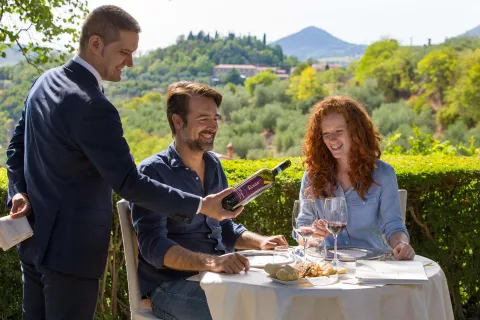
PDO San Zeno Chestnut
Chestnuts have been a staple food in mountainous regions for many centuries, and their flour is used to make bread, pasta, cakes and polenta.
The fresh nuts, typically roasted in a special perforated pan and accompanied by new wine, were the traditional fare for the harvest festival dedicated to Saint Martin. In many towns throughout the Veneto Region, this fare was often combined with the first collection of alms of the year and All Souls' Day. Special biscuits made from chestnut flour, similar to small ""castagnacci"" (chestnut cakes), marked the occasion.
Written documents mentioning cultivation of the San Zeno chestnut date back to the thirteenth, fourteenth, seventeenth and nineteenth centuries. The documents identify the typical production areas, some through cadastral maps, and provide information on the best plantations, harvesting methods and chestnuts sold at weekly markets. This tradition has been revived since the 1920s, after the First World War, and a local chestnut festival, the Sagra del Marrone, has been held regularly in November (now mid-October) in San Zeno di Montagna.
The San Zeno chestnut P.D.O. growing area is found on the slopes of Mount Baldo overlooking Verona, between the Adige river and Lake Garda, at an altitude ranging from 250 to 900 m above sea level. The lake effect keeps the climate mild. The chestnut woods are home to some ver large trees, some striking examples of which are centuries old. They grow in acid soils in a humid and temperate climate, perfect conditions for the nut to develop its distinctive features.
The Marrone di San Zeno variety differs from other chestnuts being oval-shaped and bigger than other types grown elsewhere; the pulp is richer, sweeter and more palatable, it is light with darker streaks, and the husk is thin and easy to remove.
The Protection Consortium has focussed in particular on protecting traditional farming techniques: all aspects of cultivation such as pruning, harvesting, risara (storing the nuts in their husks), novena (immersing them in water for nine days), and techniques to clean and select the chestnuts are handed down from father to son. The Consortium also sells the nuts directly, providing a link between producer and consumer, especially during the San Zeno day fair.
This municipality - where the cultivation of chestnuts has a certain economic importance - lies on the south-western slopes of Mount Baldo, in a district rich in natural beauty and striking vistas. Visitors can experience the malghe (alpine shepherds' cottages) and plan excursions in the idyllic mountains, pausing to admire the views of Lake Gard.

PDO Taleggio Cheese
Ancient and unmistakable, Taleggio is one of the most symbolic cheeses of the Po Valley dairy tradition, also produced in Veneto in the province of Treviso. Its history has its roots in the Middle Ages: as early as 1200, there are documents that testify to the trade of this cheese, begun between the Taleggio Valley and the Valsassina when shepherds transformed surplus milk into cheese to be aged in the typical mountain caves.
Over time, its production spread to the Po Valley, where artisanal dairies have been able to combine centuries-old tradition with the most modern processing techniques.
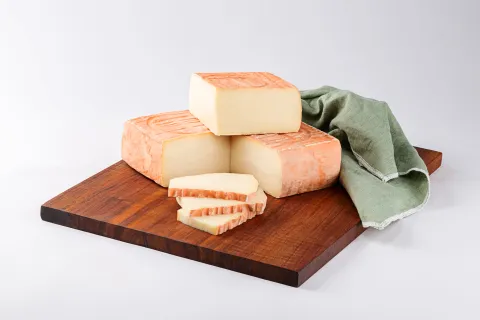
It is a soft cheese, made from cow's milk and characterised by a thin and soft rind, of a pinkish-brown colour, and a compact, white or pale yellow interior, more creamy near the rind. The flavour is delicate but decisive, with aromatic notes that are accentuated during maturation, offering the palate a perfect balance between sweetness and intensity.
Maturing takes place in humid and cool environments, between 1°C and 6°C, for at least 35 days, during which time Taleggio cheese develops its typical fragrance. Each shape bears the PDO mark and an identification number that guarantees the origin and quality of the product to the consumer.
Since 1979, Consorzio Tutela Taleggio has been safeguarding its name, promoting the value of Italian excellence and overseeing its proper production. A cheese that tells the story of a territory and that, with its creaminess and unmistakable aroma, continues to win a place on tables all over Italy.
Versatile and tasty, Taleggio PDO is the protagonist of numerous recipes: from risottos to mountain dishes, as well as in pairings with honey, fruit and local wines.
PDO Piave Cheese
The earliest productions codified with the name “Piave” date back to 1960, an era in which Piave cheese was produced in limited quantities and known only in the area of origin. Thanks to its growing success among consumers, the quantity produced has grown to a current production of 350 thousand wheels a year. The fame of this local cheese has travelled beyond the boundaries of Belluno, first to the rest of Veneto and then on to vast areas of northern and central Italy as well as abroad, in particular the United States and Canada.
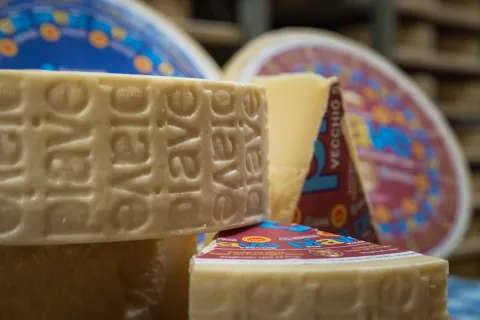
There are three types of the Piave PDO, which differ in the maturing process: the ""Fresco"" lasts from 20 to 60 days, the ""Mezzano"" from 61 to 120 days and the ""Vecchio"" more than 180 days .
In the Belluno mountain cuisine, Piave cheese is, today as in the past, the expression of a tradition made of taste and authenticity. It is eaten as a table cheese or as the main ingredients for traditional recipes such as the formai frit, i.e. fried cheese served with polenta and sauerkraut.
For the taste and characteristics of the dough to ten/twelve months' maturing is required. Piave is also popular as a grating cheese, to enrich the taste of national dishes.