Museum of the Risorgimento in Padua
The Museum is housed in the rooms of the piano nobile of the historic Pedrocchi Building, designed by Venetian architect Giuseppe Jappelli and bequeathed to the Municipality of Padua in 1891. The complex is a landmark of the city: on 8 February 1848 it was the scene of the uprising of the University of Padua's students against the Austrians, as evidenced by the plaque that marks the spot hit by an enemy bayonet bullet in the so-called 'White Room'.
Third Army Museum of Padua
Located in Palazzo Camerini Bembo in the historic centre of Padua, the Third Army History Museum a place that weaves the city's history with that of the Great War. The palace, dating back to the 14th century, was home to important families and enjoyed its most illustrious period in the 16th century with Cardinal Pietro Bembo, a central figure in Renaissance culture and the codification of literary Italian.
Verona

It is the Adige that draws Verona. It envelops her, models her, reflects her in its depths, like an artist with his own work. Admire it from Castel San Pietro: the city lies in the bend of the river as if born from its own whim, with Ponte Pietra, Ponte della Vittoria and many others stitching it together, almost in pursuit of its rhythm. Water has brought trade, wealth and stories. Perhaps this is why everything flows here, transforming without ever losing its true soul.
All you have to do is set foot in the historic centre to feel history vibrate under the cobblestones. Piazza delle Erbe has seen centuries of merchants, noble ladies and warlords, and continues to be the beating heart of the city; the frescoed facades reflect the shadows of the market while the clinking of glasses in historic cafes mingles with the voices of the people. Pass under the battlements of Castelvecchio, feel the solid strength of the Scaliger bridge and imagine the medieval defensive troops that crossed it. Then enter the streets that distance you from the river until you reach Piazza Bra, where, ancient and solemn, the Arena preserves the deep beat of the city, made up of art, music, scenery and applause.

Just outside the city, history continues to intertwine with beauty: castles, medieval villages, frescoed villas and ancient walls draw a landscape that changes with every curve. Whether it's an escape to the hills, a walk along the river or a day of art, there is always something here that is worth discovering.
A few kilometres from the city, the hills of Valpolicella are tinged with green, gold and purple. Here beauty is a pleasure that can be enjoyed with all the senses: in the glasses filled with Amarone, in the scents of tradition, and in the views that open up between the rows of trees.
In every season, these hills have something to offer. In summer you can walk along paths through the vineyards and discover hidden ancient parishes; in autumn the foliage offers unprecedented scenery; in winter the cellars welcome you with the warmth of wines; and in spring the flowers bloom in the gardens of the villas and at the foot of the waterfalls.

And as soon as the hills rise to 800 metres above sea level, the Lessinia plateau appears. In this Regional Park, nature is magnificent: woods, pastures, valleys carved out by water, thousand-year-old caves. In summer, it acts as the perfect companion together with a cool breeze along the trails, in winter it is the realm of cross-country skiing and snowshoeing. And all year round, among mountain huts and shelters, the local cuisine makes a strong impression.

Round off your trip at Lake Garda with its irresistible appeal. This shore with its lakeside villages, castles overlooking the water, small harbours and scenic paths, is able to change emotions from season to season. With sports, relaxation and culture, you will find the right rhythm to make the most of your trip.

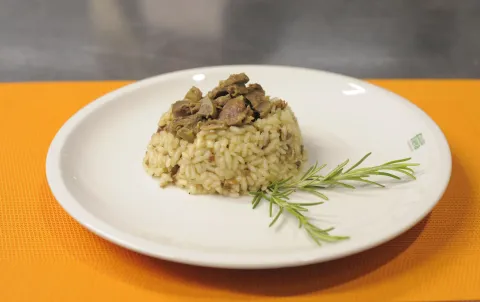
Moving south, the Plain of the Doges opens up, a land of rice fields and historic residences where tradition meets rural elegance. This is where Nano Vialone Veronese PGI rice comes from: the "white gold" that tells a story of peasant culture and the authentic taste of this territory. With its manor houses, cycle paths, genuine flavours and popular festivals, this area invites you to slow down, to explore and experience authentic tourism consisting of real experiences and sincere hospitality.
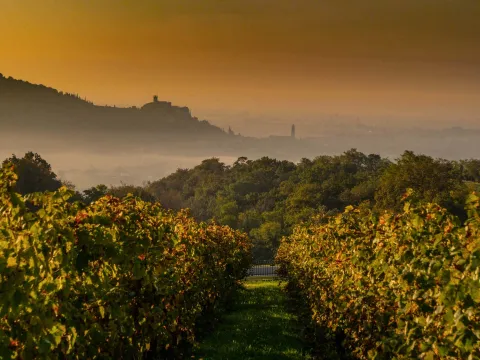
Among its gentle rolling hills, the territory of Est Veronese preserves a vast heritage of authentic experiences. From the walls of the town of Soave, this destination unfolds among cultivated valleys, hills dotted with vineyards, towns that preserve ancient traditions, churches, castles, trails, and excellent products like Soave DOC. A mosaic of landscapes that immortalises the deep connection between man, nature, and history.
Walled cities
Outposts among the vineyards
Follow the rolling Euganean Hills to the lands of Est Veronese and then head back towards the Berici Hills; here, the castles, towers and walls tell stories of borders, trade and territorial control. Located in strategic positions between the plain and the hilly areas, for centuries these fortified towns protected communication routes, markets and farming communities. Today, these outposts are immersed among vineyards and villages that safeguard some of the Veneto’s most celebrated wine-making traditions.


From the heart of the town you come to Monselice Castle, also known as Cini Castle, a highly structured complex that recounts centuries of history and architectural transformations. Climbing the hill, the route passes the Sanctuary of the Seven Churches and Villa Duodo, before reaching the Mastio Federiciano, symbol of the town. From the summit the view opens out onto the Euganean Hills and the surrounding plain, offering the same strategic vista that for centuries made Monselice such an important territorial stronghold.

Bastions, battlements and towers alternate with heritage trees and beautifully kept lawns in what is one of the most attractive public parks in the Euganean Hills. A walk along the perimeter of Castello Carrarese reveals a more unfamiliar side to Este, whose military past coexists with the pleasure of outdoor life.

Passing through one of its massive gates means entering a town that seems to have made a pact with Father Time. Almost two kilometres of medieval walls, dotted with towers and battlements, still enclose the historic centre today, and lead up to Castello di San Zeno and the Rocca degli Alberi. This is what makes Montagnana one of the best-preserved walled towns in Europe.

There is a fortress that dominates Villafranca di Verona and a long wall that once crossed the Verona countryside. These are the traces of the Scaliger stronghold, the imposing defensive system built to protect the territory. Today, the castle continues to be the symbol of the city, transforming into an enchanting stage on summer evenings to host performances under the stars.

Behind the silhouette of the Arena and the most famous squares lies a city made up of bastions, monumental gates and fortifications that tell over two thousand years of Verona's history. From the Roman walls to the major Venetian and Austrian periods, every era left its mark. Today, walking along the city walls of this UNESCO World Heritage city, you encounter peaceful little corners among the trees, small green spaces dedicated to sporting events and music festivals.

Even before passing through the gates of the town of Soave, your attention is captured by the fortress that dominates the hill and the rows of vineyards that surround it. The walls guide you through cobbled alleys and unexpected viewing points, as far as the Scaliger Castle that dominates from above. Here, the town's fortified identity meets one of the most famous wine regions of the Veneto.
Walking in the historic centre, you encounter traces of a past that today survives almost in silence. All that's now left of Calmano Castle, which for centuries dominated Lonigo and controlled an important crossroads between Vicenza and Verona, is a few towers, some sections of the ancient walls, and most notable the Torrione, the Scaliger keep that stands out on the city's skyline. An itinerary combining bridges, alleys and the banks of the Guà allows you to rediscover the fortified soul of Lonigo, a surprising outpost between the Berici Hills and the Vicentine plain.
A stroll among the crenellated walls, towers and walkways is the best way of discovering the Scaliger Castle of Arzignano, which overlooks the Chiampo Valley. Here you can explore the fortified town, visit the viewing points that look over the Vicentine hills, and participate in the events and initiatives which, especially in the summer, bring this richly historical place to life.
From the Prosecco Hills to the peaks of the Dolomites
From Treviso’s water walls to the peaks of Cadore, this route crosses some of the most symbolic landscapes of northern Veneto. A succession of small towns, historic villages and cities of art as you follow the course of the Piave, from the Prosecco Hills to the Belluno Dolomites.


Enclosed by a imposing ring of walls and crossed by canals, Treviso preserves important traces of its defensive past. The walls run for about 4 kilometres around the historic centre and are punctuated by bastions and monumental gateways such as Porta San Tomaso, considered one of the most significant examples of Venetian military architecture in the Veneto. Today pedestrian paths and green areas allow you to explore this fortified system that for centuries protected the town.

Sitting on top of the hill that overlooks the town, Conegliano Castle is a reminder of the strategic role which this outpost played for centuries in controlling the routes between the plain and the Prealps. Developed around the fortress was an elaborate defensive system, including walls, gates and towers, traces of which can still be seen in the urban fabric of the historic centre. Today the castle houses the local museum and offers a privileged vantage point of the Prosecco Hills of Conegliano and Valdobbiadene, a UNESCO World Heritage Site.

The fortified origins of Vittorio Veneto are linked to the hamlet of Serravalle, dominated by the Castello di San Martino and protected by walls and gates that controlled its access. For centuries this defensive system watched over the passage between the Treviso plain and the Alpine valleys, contributing to the development of the settlement. The castle and the historic centre of Serravalle still retain the imprint of the ancient fortified village today.

Overlooked by the Castle of Alboino on the Colle delle Capre, Feltre preserves one of the most significant defensive systems of the Venetian pre-Alpine area. Its strategic position between the plain and the Dolomite peaks made the town an important military stronghold from the middle ages onwards. This complex still tells the story of centuries of conflict and reconstruction today, while the castle area offers a spectacular view of the Vette Feltrine.

A political and administrative centre for centuries, Pieve di Cadore is located in a strategic position that contributed to its development as a stronghold of the alpine territory. The fortifications that controlled the valley and the main routes of communication towards northern Europe stood on Monte Ricco. Today the Monte is a reminder of the ancient defensive function of the territory and offers a privileged view over the surrounding mountains, emphasising the strategic role this place played in the history of Cadore.