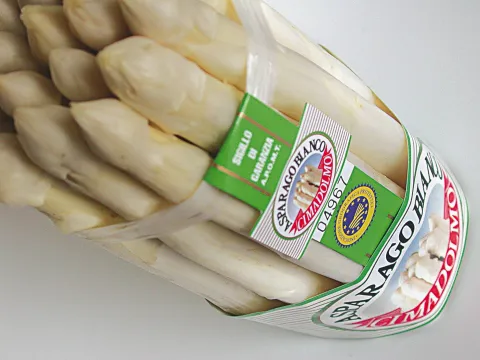
Seven places to admire the autumn foliage
Veneto offers endless natural settings where you can admire the most extraordinary spectacle of autumn: the foliage. Here are the places where you can lose yourself in nature, taste the chestnuts, enjoy some fine wine and relax at the thermal spas, surrounded by the warm colours of the season.

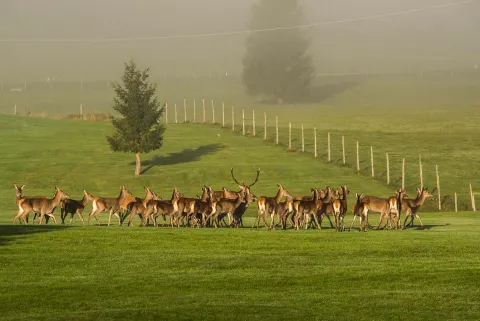
The Cansiglio Plateau, with its thousand-year-old forest, is located between the Belluno Prealps and upper Marca Trevigiana. Autumn is the best time to stroll among its beech and spruce trees: just take one of the many paths to find yourself immersed in a sea of reds, yellows and ochres. This is the deer mating season. As you walk along the trails, you may hear their bellowing, but take care not to disturb them.
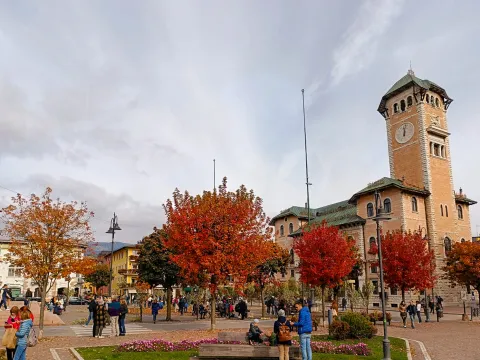
Hiking enthusiasts have a virtually endless array of trails to choose from, be it gentle walks to discover ancient hamlets or more challenging mountain hikes. Held every year towards the end of October, the Asiago Foliage festival celebrates the most exciting sight of the year with guided tours, photography competitions, children's workshops, music and tastings of typical products such as Asiago PDO cheese.
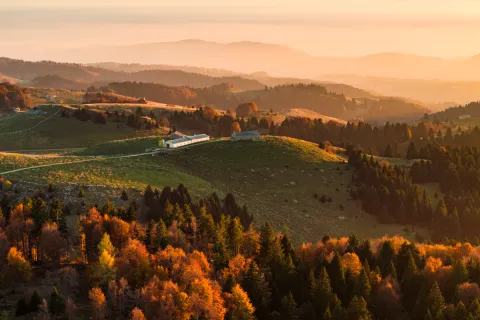
North of Verona, the colours of the foliage reveal themselves in all their splendour in the Lessinia Regional Natural Park. Here, karst has created incredible formations, such as Ponte di Veja, Europe's largest natural arch, Spluga della Preta, a chasm that plunges approximately one thousand metres into the earth, and the Valley of the Sphinxes, with its fascinating limestone monoliths surrounded by beech trees that glow with copper and golden hues in autumn.
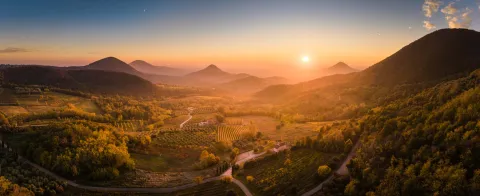
Is there anything more relaxing than soaking in thermal waters while the surrounding leaves fall in a golden dance? This is autumn in the Euganean Hills, immersed among the villages, spas and vineyards. One must-visit site is the Mottolone Plateau, a natural terrace with one of the widest panoramas of the hills, just a few minutes from Arquà Petrarca, one of Italy's most beautiful villages.

Valpolicella, home of Amarone DOCG and Valpolicella Ripasso DOC, will steal your heart with its copper-coloured vineyards and delight your palate with delicious tastings. If you want to discover the foliage, climb up to the village of San Giorgio Ingannapoltron and, from Piazza della Pieve, admire the vineyards that change colour as the sun sets behind Lake Garda.
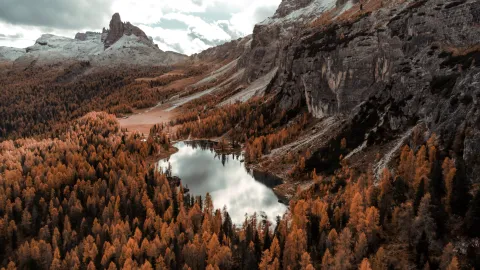
If you want to take some amazing photographs, here are two must-see panoramas! Lake Antorno, between Lake Misurina and the Tre Cime di Lavaredo, and Lake Federa, at the foot of Croda da Lago, are a truly spectacular sight, the rocky peaks blending with the hues of the foliage to create unique reflections on the surface of the water.
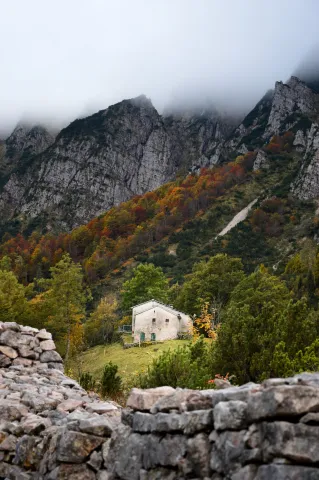
Dozens of routes of all levels wind their way between Recoaro Terme and Valli del Pasubio, but in autumn two stand out above the rest: the Sentiero dei Grandi Alberi and the AVIS Bridge. The first is an 11-kilometre route across the Montagnole Plateau lined with enormous trees that take on bronze and copper hues in autumn; the second is a 105-metre rope bridge suspended 35 metres above the coniferous forest.
The Route of the Cimadolmo White Asparagus
A journey through landscapes carved by the course of the Piave River, crossing 11 municipalities in the province of Treviso, to discover the white gold, a product known since antiquity and even mentioned by Pliny the Elder: Cimadolmo White Asparagus PGI.
To discover it, you have to journey approximately 90 kilometres through cultivated fields, vineyards and villages, where nature and history intertwine. From Cimadolmo, the main production site, the trail passes through San Polo di Piave, Ormelle, Ponte di Piave and Maserada sul Piave before reaching Oderzo, following a landscape which has been shaped over the centuries by the river's waters. The countryside is dotted with Roman-era remains and ancient parish churches while along the Piave you will encounter places that preserve the memories of the First World War.
But it is in spring that the route changes pace. The bright asparagus, grown under the soil to protect it from light and preserve its characteristic white colour, is harvested in the fields. Tender, delicate, and the star of traditional local recipes, it is soon served up at the dinner table with eggs, in risottos and alongside meat and fish.